Cable Gland M12 for Outdoor Enclosures: What to Know Before You Fit One
A cable gland M12 has a 12 mm metric thread, and it fits a hole drilled to about 12.2 mm. It grips round cables with an outer diameter of roughly 3 to 6.5 mm, depending on the seal insert. That covers most thin coaxial pigtails, small power leads and slim Ethernet cables without a connector on the end.
If your cable is thicker, move up a size. M16 handles about 4 to 8 mm, M20 about 6 to 12 mm.
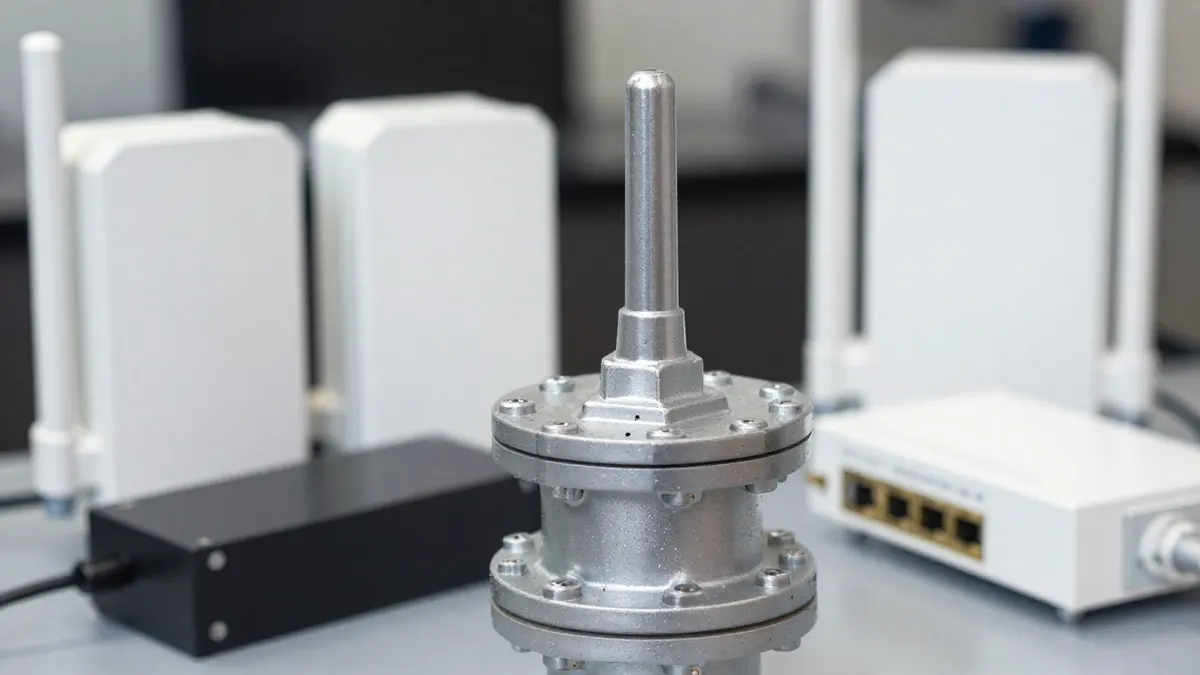
Cable gland M12: size and cable range
The "M12" refers to the thread only, not the cable. People mix this up all the time and end up with a gland that screws in fine but never grips the cable.
Measure the jacket of your cable with calipers, not the conductor. Then check that the number sits in the middle of the gland's clamping range, not at the edge. A cable at the very bottom of the range tends to slip, and one at the very top may tear the seal when you tighten.
Typical dimensions for a plastic nylon M12 gland:
- Thread length: about 6 to 8 mm
- Hex nut size: about 15 mm across flats
- Mounting hole: 12 to 12.5 mm
- Rated protection: IP68 when fitted correctly
Plastic or brass?
For a hotspot or sensor box on a roof or mast, nylon (PA66) is the sensible pick. It is cheap, it does not corrode, and glands cost from about 0.20 to 0.60 EUR each when bought in packs. Choose UV-stabilised black over grey if the box sits in full sun for years.
Brass, nickel plated, makes sense when you need earthing continuity or the enclosure is metal and exposed to mechanical stress. It costs a few times more and adds little for a small LoRaWAN setup.
Fitting it in an enclosure
Drill, deburr, insert, tighten. That is the whole job, but the details decide whether water gets in.
- Mark the hole at least 15 mm from the wall edge and away from the lid seal.
- Use a step drill bit for plastic. A twist bit tends to crack the shell.
- Remove burrs with a small knife so the O-ring sits flat.
- Thread the cable through the dome nut and seal insert first, then through the body.
- Tighten the body from outside, then close the dome nut by hand plus a quarter turn with a spanner.
Leave a drip loop in the cable before it enters the box. Water follows the cable down and drips off the lowest point, so make that point sit below the gland, not at it.
Always point glands downward or sideways on the bottom or lower sides of the box. Top entry is where most leaks start.
Choosing the right enclosure and nut
A gland is only as waterproof as the box around it. An IP66 waterproof enclosure of about 225 x 173 x 86 mm gives enough room for a small LoRaWAN gateway, a power supply and a few glands without crowding the seals. Smaller boxes force cables into tight bends that pull on the gland.
On the inside, the lock nut matters too. Many multipacks sold under the name Cable gland nut M12 M32 cover several thread sizes, which is handy if you are mixing a slim antenna lead with a thicker power cable in one box.
Sealing the weak points
Glands seal the cable jacket. They do not seal an RF connector. For an N-type or SMA joint outside the box, wrap it with self-amalgamating tape, such as J20 waterproof tape, using about 50% overlap and three layers. Stretch it as you wind, so it fuses into one rubbery sleeve.
Skip silicone sealant on the thread unless the gland has no O-ring. A good O-ring does the work, and sealant can stop you from reopening the box later.
Common mistakes
- Using a gland on a cable with a connector already crimped on, which forces you to enlarge the hole.
- Over-tightening, which crushes thin coax and raises signal loss.
- Drilling oval holes with a hand drill, which leaves a gap around the thread.
- Reusing a gland whose insert is permanently compressed.
Frequently Asked Questions
What cable diameter fits an M12 cable gland?
Most M12 glands take cables from about 3 to 6.5 mm in outer diameter. Check the datasheet, since some compact versions stop at 5 mm. Measure the jacket, not the wire inside.
Is a cable gland M12 really waterproof?
Quality nylon glands are rated IP68, but only with a matching cable, a clean round hole and a properly tightened dome nut. A badly seated gland can leak at IP54 levels or worse.
Can I use one gland for two cables?
Not with a standard single-hole insert. Multi-hole inserts exist for two thin cables, but one cable per gland is more reliable and easier to service.
What drill size do I need for M12?
A 12 mm hole is the minimum, and 12.5 mm gives a little room for plastic that shifts when drilled. Go slowly and deburr afterward so the seal sits flat.
How long does a plastic gland last outdoors?
UV-stabilised nylon usually lasts 5 to 10 years in direct sun. Check the seal insert once a year, because rubber ages sooner than the body.