Cable Gland Nut M12-M32 for Outdoor Enclosures
What a cable gland nut does
A cable gland nut is the locking piece that holds a gland body tight against the wall of an enclosure. It screws onto the threaded part of the gland from the inside, pulls the flange against the housing and compresses the sealing washer. Without it, the gland simply falls out of the hole.
On a Helium hotspot or LoRaWAN gateway mounted on a pole, that small hex nut matters more than it looks. Rain, wind and temperature swings all test the seal every day.
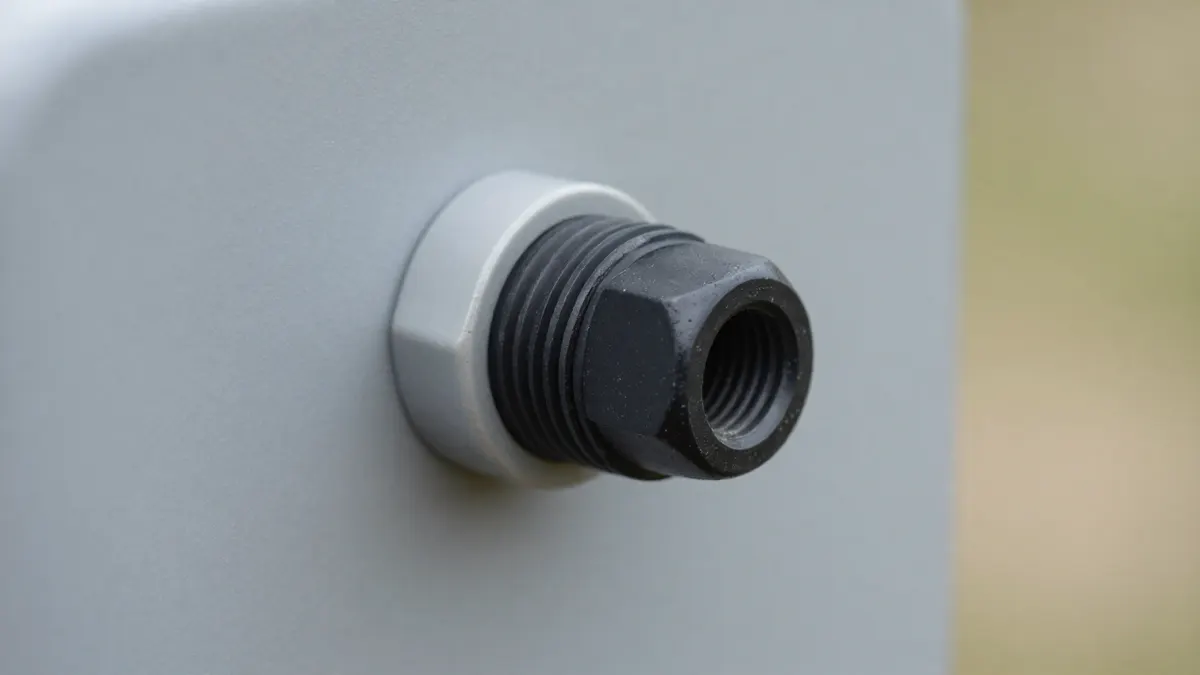
Sizes: M12, M16, M20, M25 and M32
The "M" number is the outer diameter of the thread in millimetres. The hole you drill must match it, with a little play, usually 0.2 to 0.5 mm larger. A nut always has to match the gland thread, so mixing sizes never works.
- M12: hole of about 12.5 mm, cable diameter roughly 3 to 6.5 mm
- M16: hole of about 16.5 mm, cable roughly 4 to 8 mm
- M20: hole of about 20.5 mm, cable roughly 6 to 12 mm
- M25: hole of about 25.5 mm, cable roughly 9 to 16 mm
- M32: hole of about 32.5 mm, cable roughly 13 to 20 mm
Most hotspot installs use a single power cable and one Ethernet or antenna lead. For those, M16 or M20 is the usual pick. If you need a gland body to go with the nut, the Cable gland M12-M20 range covers the small and medium cases.
Choosing the right cable gland nut material
Nylon (PA66) nuts are cheap, often under 1 EUR each, and fine for most sheltered or shaded spots. They are rated for about -40 to 100 °C. In full sun for years, though, cheap nylon can turn brittle, so UV-stabilised black is the safer choice.
Brass, nickel-plated, costs several times more. It makes sense when you need earthing continuity or a mechanical grip that will never creep. For a typical rooftop gateway, UV-stable nylon does the job.
How to fit a cable gland nut properly
- Drill or step-drill the hole to the exact size. Remove burrs with a small file.
- Check the O-ring or flat washer sits on the outside, between the flange and the wall.
- Push the gland body through from outside.
- Thread the nut on from inside and tighten by hand first.
- Finish with a spanner, about a quarter to half turn past hand-tight.
- Pass the cable through and tighten the dome cap until the insert grips the jacket.
Over-tightening is the common mistake. On a thin plastic wall, too much force cracks the enclosure around the hole or squashes the washer unevenly. Nylon M20 nuts typically need only about 2 to 4 Nm.
Sealing the whole setup
A good nut gives you a tight mount, but the seal is only as good as the weakest point. Choose an IP66 waterproof enclosure with a flat, clean wall where the washer can bed down. Textured or curved surfaces let water creep past.
For connectors that exit through the gland, wrapping them with J20 waterproof tape adds a cheap second barrier. Inside the box, a Dehumidification bag for enclosure helps with condensation, which gets in even when the seal is perfect, simply because warm air cools overnight.
Common problems
The nut spins without tightening
The thread is probably stripped, or the nut belongs to a different size or pitch. Metric glands use a 1.5 mm pitch for M20 and above, while M12 and M16 use a finer one in many designs. Replace both parts together.
Water gets in after a few months
Check the washer first. A flattened or cracked washer is the usual cause. Swap it, clean the wall and retighten. If the cable jacket is oval or very soft, the insert may not grip evenly either.
Frequently Asked Questions
Do I need a lock nut on every cable gland?
Yes, if the gland has an external thread and goes through a plain hole. Some glands screw into a tapped hole and need no nut, but most enclosure walls are not threaded.
Can I use a metal nut on a plastic gland?
You can, but it is rarely worth it. The mismatch in hardness makes it easy to crush the thread. Keep nylon with nylon and brass with brass.
What size hole fits an M20 cable gland nut?
Drill 20.5 mm. A 20 mm hole is very tight, and anything above 21 mm leaves a gap that the washer may not close well.
How long does a cable gland nut last outdoors?
UV-stable nylon usually lasts 5 to 10 years on a pole or wall. Brass can outlast the enclosure itself, though salty coastal air may tarnish it sooner.