SenseCAP Outdoor Gateway LoRaWAN (EU868MHz): Range, Specs and Setup
The SenseCAP outdoor gateway LoRaWAN EU868 is a weatherproof, pole-mounted gateway built for the 863 to 870 MHz band used across Europe. It receives packets from sensors and relays them to a network server over Ethernet, Wi-Fi or cellular, depending on the variant. Typical open-air range is 2 to 5 km in towns and up to 10 km or more with a clear line of sight.
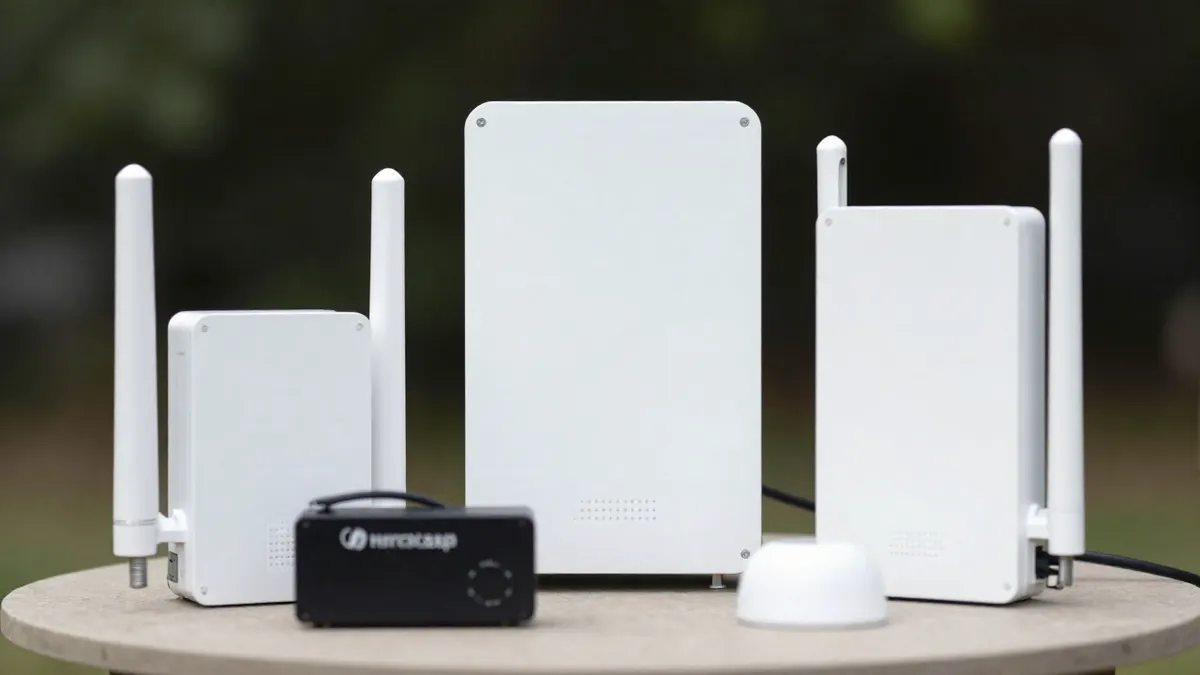
What the outdoor gateway does
A LoRaWAN gateway is a radio bridge. Sensors send tiny messages on a low-power radio link, and the gateway forwards them to the internet. It does not process the data itself.
The outdoor model suits farms, campuses, car parks, vineyards and city rooftops. One unit commonly handles several hundred sensors sending a reading every 10 to 30 minutes, though the real limit depends on message size and spreading factor.
Key specifications to check
Specs vary slightly by revision, so confirm them against the datasheet of the unit you buy. These are the values most listings show.
- Frequency plan: EU868, with 8 channels
- Protection rating: IP65, suited to rain and dust
- Power: 12 V DC or Power over Ethernet, depending on version
- Backhaul: Ethernet as standard, with Wi-Fi or LTE on some versions
- Antenna: external N-type connector, often with a 3 to 5 dBi antenna included
- Operating temperature: roughly -40 to 65 °C
Choosing between outdoor and indoor gateways
If your sensors sit in a single building, an indoor unit is cheaper and easier. The SenseCAP M1 indoor hotspot, for instance, covers a house or small office without any mounting work.
Go outdoor when the signal has to cross fields, streets or several buildings. A gateway placed high and outside gives far better coverage than one behind a window, and the gap is often 3 to 5 times in distance. The extra cost, usually somewhere from about 100 to 250 EUR depending on version, pays back quickly on a large site.
Mounting and antenna placement
Height matters more than almost anything else. Aim for at least 5 to 10 metres above the surrounding clutter, on a mast, chimney bracket or the side of a tall wall.
Keep the antenna vertical and away from metal sheets, which reflect and detune the signal. Use short, good quality coax if you move the antenna away from the unit, since every metre of cheap cable can cost around 0.5 dB or more at 868 MHz.
Fit a surge protector if the mast is the tallest object around. Lightning damage is the most common cause of dead outdoor gateways.
Setting up the SenseCAP outdoor gateway LoRaWAN unit
Setup follows the same steps for most network servers.
- Power the gateway and connect it to your network, or insert a SIM if your version supports LTE.
- Note the gateway EUI printed on the label or shown in the configuration page.
- Register that EUI on your network server, such as The Things Stack or a Helium-compatible console.
- Choose the EU868 frequency plan and a packet forwarder setting that matches the server.
- Check the live data view and confirm a test sensor is being heard.
Allow about 20 to 40 minutes for a first install, longer if the mast work is yours.
Sensors that work well with it
Most LoRaWAN sensors join without trouble once the EUI and keys are entered. A SenseCAP barometric pressure sensor is a simple first test, because it sends small, regular packets and can run for years on its battery.
For air quality projects, an Atmotube Pro air quality monitor uses a different connection model, so check compatibility before assuming it will talk to your gateway.
Common problems
Weak coverage is usually a placement issue, not a hardware fault. Move the antenna higher before replacing anything.
If the gateway shows online but sensors are silent, check the frequency plan first. A mismatch between EU868 and another region is the classic mistake. Also check that the sensor's join keys match what is stored on the server, character for character.
Duty cycle limits in Europe cap transmission time on most sub-bands at 1 percent, which affects how often downlinks can be sent. Plan acknowledgements sparingly.
Frequently Asked Questions
How far can a SenseCAP outdoor LoRaWAN gateway reach?
In urban areas expect about 2 to 5 km. In open countryside with the antenna mounted high, 10 km or more is realistic, and line of sight can push it further.
Does it need a wired internet connection?
Ethernet is the standard backhaul and the most stable. Some versions add Wi-Fi or cellular, which is useful on remote sites without a cable run.
Can I use it with networks other than Helium?
Yes. It is a standard LoRaWAN gateway, so it can connect to servers such as The Things Stack or ChirpStack once the packet forwarder is set correctly.
Is the EU868 version legal outside Europe?
Not automatically. Frequency rules differ by region, and EU868 is meant for Europe and some neighbouring countries. In North America you would need a US915 model instead.