Helium Hotspot Mounting: How to Place Your Miner and Antenna
Good helium hotspot mounting comes down to one thing: get the antenna high, in the clear, and keep the miner dry. A hotspot on a windowsill covers a fraction of what the same unit does from a roof edge or a mast.
LoRaWAN runs on low-power sub-GHz radio (868 MHz in Europe). That signal passes through air easily and loses a lot against brick, concrete and metal. Every obstacle between the antenna and the horizon costs range.
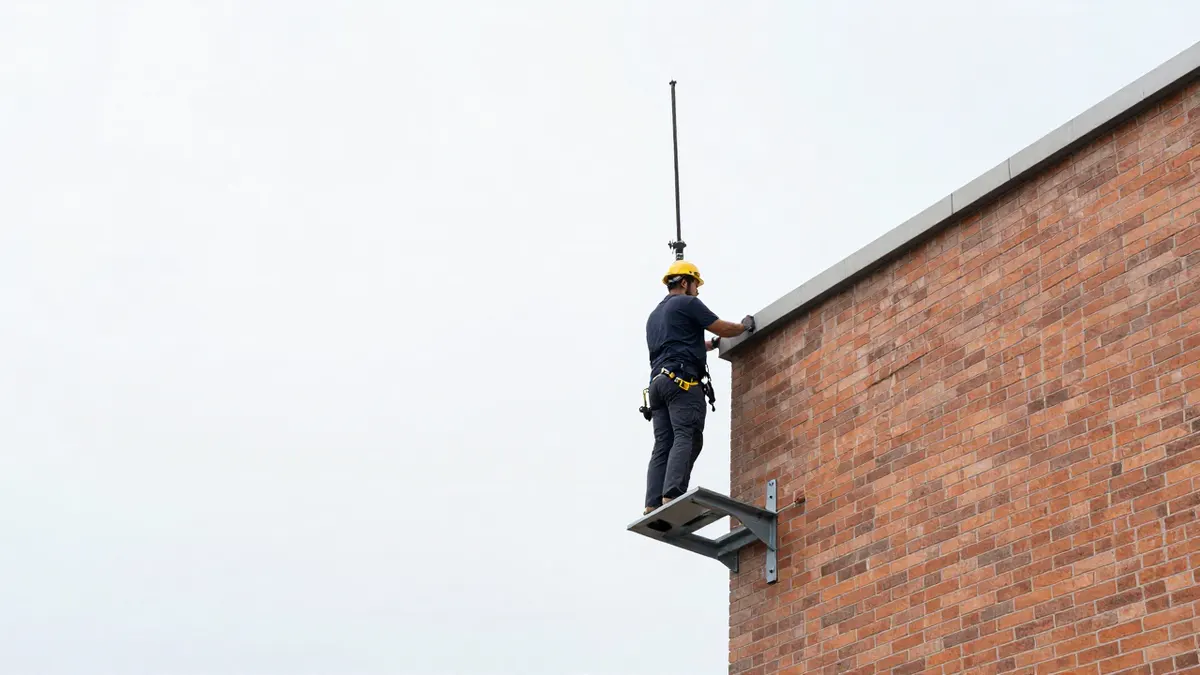
How high should a Helium hotspot be mounted?
Higher is better, up to a point. Indoors behind glass, expect a few hundred metres in a city. Outdoors at 6 to 10 metres above the ground, with a clear view over nearby roofs, 2 to 5 km is realistic. In open countryside a well-placed antenna can reach 10 km or more.
Roof height matters more than antenna gain. A 5 dBi antenna at the ridge of a house will usually beat an 8 dBi antenna in a ground-floor garage. Gain squeezes the signal into a flatter pattern, so a very tall, high-gain antenna can leave a dead zone right below it.
Choosing a mount for the antenna
The mount depends on what you have to attach it to. Three situations cover most setups.
- A masonry or timber wall, where an Antenna wall mount bracket holds the antenna a few centimetres clear of the surface.
- A flat or chimney-side position on a house, where a pole clamp works better.
- A rented flat with limited access, where a railing or balcony fitting is the only option.
For apartments, a Helium antenna balcony mount is often the practical answer. Clamp it to the outer side of the railing so the antenna sits beyond the building line, not behind the glass door. Keep it away from metal shutters and awnings.
Exposed locations such as a gable end or a coastal wall call for a Heavy duty antenna wall mount. Wind loads add up fast on a long fibreglass antenna, and thin brackets bend or loosen after a winter. Stainless steel fixings, around M6 or M8, are worth the small extra cost.
Protecting the hotspot itself
Most miners are not built for rain. If the unit goes outside, or into an unheated attic or shed, it needs a sealed box. An IP66 waterproof enclosure of about 225 x 173 x 86 mm fits the majority of compact LoRaWAN hotspots with room for a power supply and cable glands.
Condensation is the usual killer, not rain. Add a small silica gel pack, mount the box with the glands pointing down, and leave a drip loop in every cable.
Cable length and signal loss
Coax cable eats signal. Standard thin cable like RG58 loses roughly 1 dB per metre at 868 MHz, so a 5 metre run costs about 5 dB, which cancels the gain of a bigger antenna. Low-loss LMR400 type cable loses far less, around 0.2 dB per metre.
The better layout is to put the hotspot close to the antenna and run Ethernet or power over the long distance instead. Ethernet carries up to 100 metres with no radio loss. If you can, place the enclosure right under the antenna and keep the coax under 1 metre.
Practical placement checklist
- Keep the antenna vertical, not tilted.
- Stay at least 1 metre from other antennas and metal masts.
- Avoid mounting directly behind a chimney or a solar panel array.
- Add a lightning arrestor and a proper earth where the mast rises above the roofline.
- Seal every outdoor connector with self-amalgamating tape, then a layer of vinyl tape.
Check local rules before drilling. Landlords, housing associations and some councils restrict exterior fixings, and a quick message beforehand avoids removal requests later.
Frequently Asked Questions
Can I mount a Helium hotspot indoors?
Yes, and many people do. Put it next to a window on the highest floor, with the antenna upright. Expect noticeably shorter range than an outdoor setup, usually under 1 km in built-up areas.
What height gives the best coverage?
Aim for at least 6 metres above street level with a clear line toward the horizon. Beyond roughly 15 metres the gains flatten out, and wind load and cabling costs rise quickly.
Do I need a waterproof box if the antenna is outside?
If only the antenna is outside and the miner stays indoors, no. If the miner itself sits outdoors, in a garage or in a loft, a sealed IP66 case is strongly recommended.
How far from the hotspot can the antenna be?
Keep the coax run as short as you can, ideally under 3 metres with low-loss cable. If you need more distance, move the hotspot next to the antenna and run Ethernet instead.