Antenna Wall Mount Heavy Duty: What to Look For
A heavy duty antenna wall mount is a steel or thick aluminium bracket that holds a fiberglass or Yagi antenna firmly against a wall, even in gusts above 100 km/h. For a Helium LoRaWAN hotspot, that matters more than people expect. A loose or swaying antenna shifts its pattern and, over a winter, can shear its own fixings.
This page covers materials, load ratings, fixings and placement, so you can judge any bracket before you put holes in a wall.
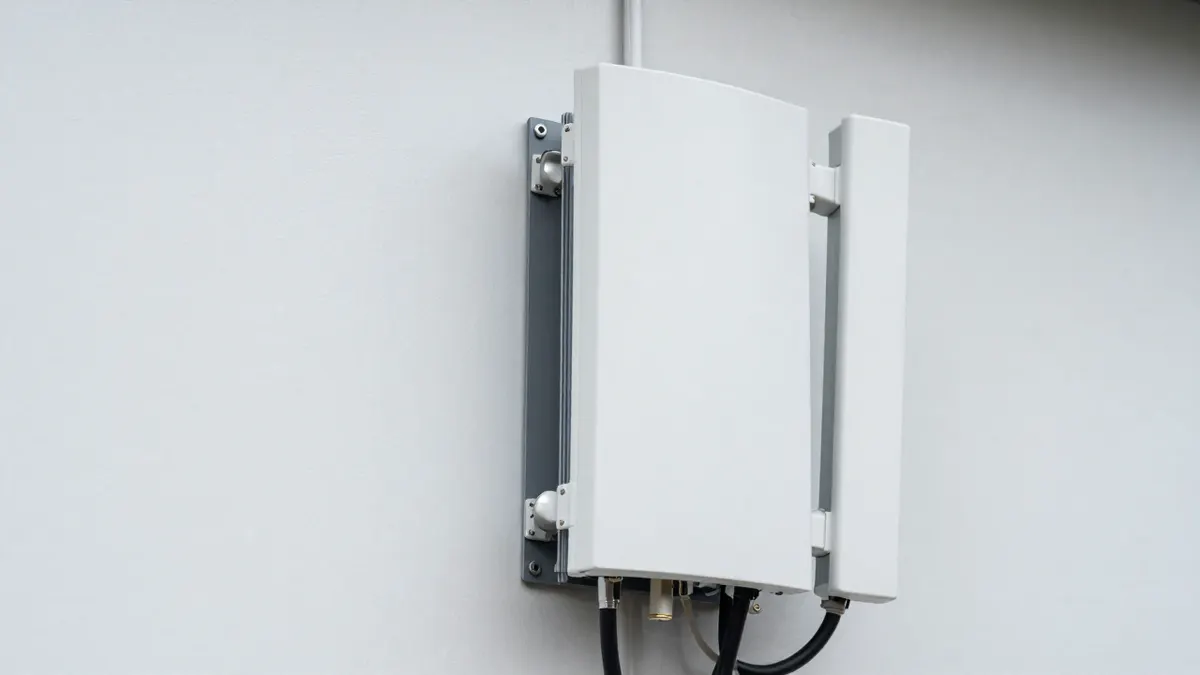
What Makes an Antenna Wall Mount Heavy Duty
Three things separate a sturdy bracket from a flimsy one: metal thickness, arm length and the way the pole is clamped.
Look for steel of at least 3 mm, hot-dip galvanized or powder coated. Thin 1.5 mm brackets bend at the first knock. Aluminium is lighter and will not rust, but it needs a thicker section to match steel, usually 4 mm or more.
Most 868 MHz and 915 MHz fiberglass antennas weigh between 0.5 and 2 kg. That sounds light. Add wind load on a 1.2 m antenna and the force on the bracket multiplies quickly, so a rating of 15 to 25 kg gives a comfortable margin.
Arm length and offset
A short arm of 10 cm keeps the antenna tight to the wall, which is neat but hurts the signal. Brick, concrete and metal cladding all absorb and reflect radio waves. An offset of 30 to 50 cm is a better compromise, and for a stronger result you can go to 60 cm if the bracket is thick enough to resist the leverage.
Clamp style
Two U-bolts beat a single screw clamp every time. They spread the grip and stop the pole from rotating. If your antenna sits on a pole of 40 to 60 mm, a matching Mast pole clamp 40-60mm gives the grip that a bracket alone cannot always provide.
Wall Types and Fixings
The bracket is only as strong as what holds it. Pick fixings for your wall, not the ones that happen to be in the box.
- Solid brick or concrete: M8 or M10 expansion anchors, at least 60 mm deep.
- Hollow brick or blockwork: chemical anchors with mesh sleeves.
- Timber cladding: coach screws into the frame behind, never into the boards alone.
- Rendered or insulated walls: long fixings that pass through to the masonry, plus a spacer to avoid crushing the insulation.
Use stainless steel bolts. Mixing galvanized brackets with plain zinc bolts invites rust streaks within two years, particularly near the coast.
Placement Tips for Better Coverage
Height beats almost everything. Mount the antenna as high as the wall allows, ideally above the roofline or at least 1 m clear of the eaves. Every extra 3 m can noticeably widen your range in built-up areas.
Keep it at least 1 m from metal gutters, satellite dishes and solar panels. Point the antenna vertically, since LoRa uses vertical polarization. A tilt of more than 10 degrees costs signal.
If you need a simple fixed option, a standard Antenna wall mount bracket works well for lighter antennas under 1 kg. Step up to the heavy version once the antenna is longer than 80 cm or the spot is exposed to wind.
Alternatives When a Wall Is Not an Option
Not every site has a suitable wall. Flat roofs call for a Tile base antenna mount, which sits on the roof covering without drilling through it. Flats and apartments often use a Helium antenna balcony mount that clamps to a railing and avoids any work on the building.
Check lease terms or ask the landlord before drilling into shared walls. It saves an awkward conversation later.
Installation Checklist
- Mark the holes with a spirit level, using the bracket as a template.
- Drill, clean the dust out and fit the anchors.
- Tighten the bolts evenly, then check for movement by hand.
- Fit the antenna and weatherproof the connector with self-amalgamating tape, covered by a layer of vinyl tape.
- Form a drip loop in the cable below the connector so water runs off.
Recheck the fixings after the first storm, then once a year. Bolts loosen as the wall and metal expand and contract through the seasons.
Frequently Asked Questions
How much weight should a heavy duty antenna wall mount hold?
For typical LoRaWAN antennas, a rating of 15 to 25 kg is plenty. The antenna itself is light, but wind load and leverage on a long arm are what stress the bracket. Choose the higher rating if the wall faces open ground.
Can I fit a wall mount on a rented property?
Often yes, but you need permission first. Drilling into a landlord's wall without consent can breach your lease. A balcony or railing mount is usually a safer route in flats.
Is galvanized steel better than aluminium for outdoor use?
Both last for years outdoors. Galvanized steel is stronger for the same thickness and costs less, while aluminium is lighter and will not rust. Near the sea, aluminium or stainless steel tends to age better.
How far from the wall should the antenna sit?
Aim for 30 to 50 cm if the bracket allows it. That distance reduces reflections from the wall and improves the radiation pattern. Closer than 15 cm, you will usually see a drop in signal.
Do I need a lightning arrestor with a wall-mounted antenna?
It is strongly advised for any antenna mounted above the roofline. A coaxial surge protector, around 10 to 25 euros, connects between the antenna cable and the hotspot, and it must be earthed properly to work.