HHS-400 N-Male to SMA-RP-Male Antenna Cable: What It Does and When You Need It
The HHS-400 N-male to SMA-RP-male cable is a low-loss coax jumper with a type N plug on one end and a reverse-polarity SMA plug on the other. You use it to connect a LoRaWAN hotspot, whose antenna port is usually an SMA-RP female, to an outdoor antenna that ends in an N-female socket. That is the whole job, and it explains most of the confusion around the part.
Reverse polarity matters. An SMA-RP male has a female center pin inside a threaded barrel, so it looks like a standard SMA plug but will not mate properly with a standard SMA connector.
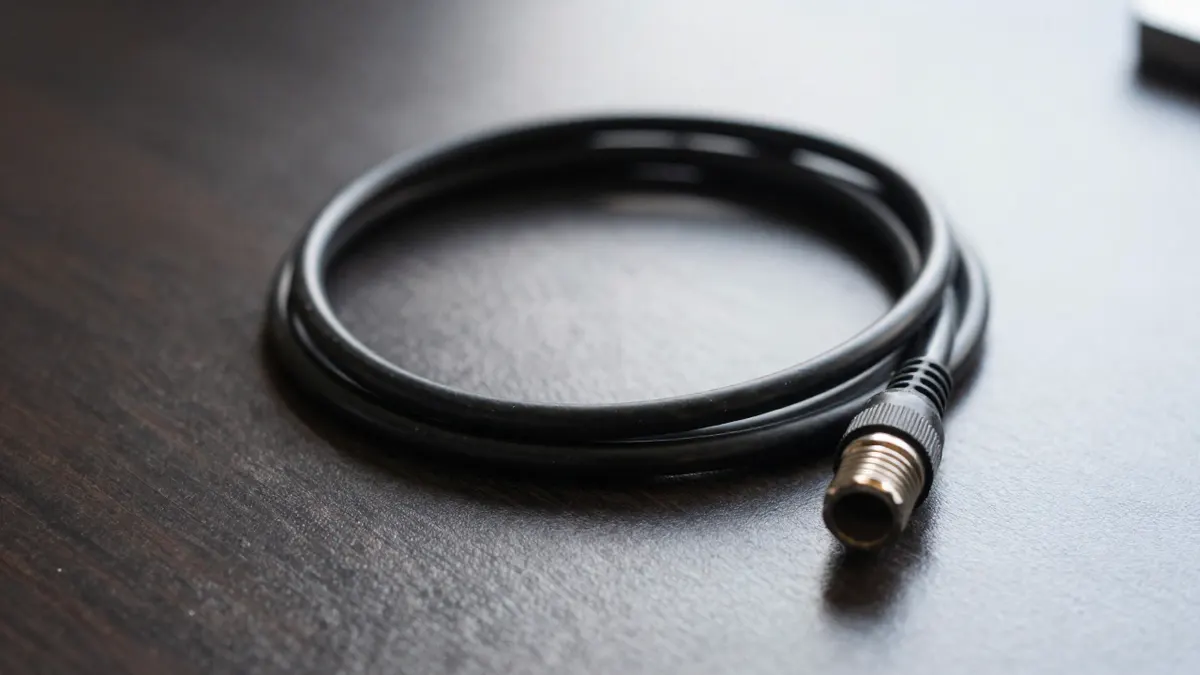
HHS-400 N-male to SMA-RP-male: the basics
HHS-400 is a 50 ohm cable in the same class as LMR-400, with a diameter of roughly 10 mm. It uses a solid or foam dielectric and a double shield, which keeps signal leakage low and makes it stiff enough to resist kinking when run along a mast.
Typical attenuation sits around 0.22 dB per meter at 868 MHz, and about 0.24 dB per meter at 915 MHz. A 5 m run therefore costs you roughly 1.1 to 1.2 dB. Add a few tenths of a dB for each connector pair.
- Impedance: 50 ohm
- Outer diameter: about 10 mm
- Minimum bend radius: roughly 25 mm for a one-off bend, more for repeated flexing
- Frequency range: DC to several GHz, so fine for EU868, US915 and AS923
Which hotspots and antennas it fits
Many Helium-style hotspots, including most Bobcat, SenseCAP, RAK and Milesight units, expose an SMA-RP female or an SMA female port on the case. Check the connector before anything else. Look inside the threaded barrel: a center pin means male, a hole means female. Then see whether the pin or socket sits in the thread, which tells you standard versus reverse polarity.
On the antenna side, most fiberglass omnis and Yagi panels for 868 or 915 MHz come with an N-female base. This cable plugs straight into it. If your antenna instead has an N-male base, you need a female N end on the cable, which is a different part.
For setups with an SMA-male hotspot port and an N-female antenna, look at the HHS-400 N-female to SMA-male variant instead. Gender mix-ups are the most common reason a cable arrives and does not fit.
Choosing the right length
Shorter is better. Every extra meter of HHS-400 costs about a quarter of a dB, and that loss hits both transmit and receive. Keep the run under 5 m if you can, and treat 10 m as a practical ceiling for a hotspot that sits indoors with an antenna on the roof.
If you need more than 10 m, move the hotspot closer to the antenna and run Ethernet or PoE instead. Network cable loses nothing in radio terms, and it is cheaper per meter. Prices for 3 to 5 m jumpers of this type usually fall between about 15 and 30 EUR, depending on connector quality.
HHS-400 vs LMR-400 cable
The two are close electrically. Both are 50 ohm, both have loss in the 0.2 dB per meter range at these frequencies, and both use a similar thickness. LMR-400 is a specific brand with tightly published specs, while HHS-400 is a generic equivalent that varies a little more between makers. In practice, you will not notice the difference on a short hotspot run.
If you want to compare the exact brand version, read about the LMR-400 antenna cable. For a female N end on a reverse-polarity SMA male, the LMR-400 N-female to SMA-RP-male listing covers that layout.
Installation tips
Seal outdoor connections. Wrap the N connector with self-amalgamating tape, then a layer of vinyl tape over it, and leave a drip loop in the cable below the joint so water runs away. Water in a connector can add several dB of loss within a season.
Hand-tighten the N connector, then add a quarter turn with a wrench at most. Over-torquing damages the center pin. For SMA-RP, finger tight is enough.
Lightning protection is worth adding on a roof or mast. A gas discharge arrestor placed at the building entry point, grounded to your earth, costs around 10 to 25 EUR and protects the hotspot.
Frequently Asked Questions
Can I use this cable with a standard SMA hotspot port?
No. A standard SMA female port needs an SMA-male plug, and an SMA-RP male will not mate correctly. Forcing it can damage the center pin. Check the port first and pick the matching gender and polarity.
How much signal do I lose with a 5 m cable?
Around 1.1 to 1.2 dB from the cable itself at 868 or 915 MHz. Connectors add a little more, so plan for about 1.5 dB in total. That is roughly a 30 percent drop in power, which is acceptable if the antenna sits well above clutter.
Is HHS-400 suitable for outdoor use?
Yes, the jacket is UV resistant and made for exposure. The connectors are the weak point, so weatherproof them properly. Check them once a year for corrosion.
Does the cable work on both EU868 and US915?
It does. The cable is wideband and loss changes only slightly between the two bands. What matters is that the antenna itself is tuned for your region.