Tile Base Antenna Mount 30x30cm for LoRaWAN and Helium Antennas
A tile base antenna mount is a flat plate, here 30x30cm, that sits on a pitched roof in place of a few tiles and carries a short mast. It lets you raise a Helium or LoRaWAN antenna above the ridge line without drilling through the roof covering or fixing to a chimney. The plate is usually galvanised steel, about 3 to 4mm thick, with a welded tube or a bolted clamp on top.
For a hotspot, the appeal is simple. Height is the biggest factor in LoRa coverage, and a roof is usually the highest point you control.
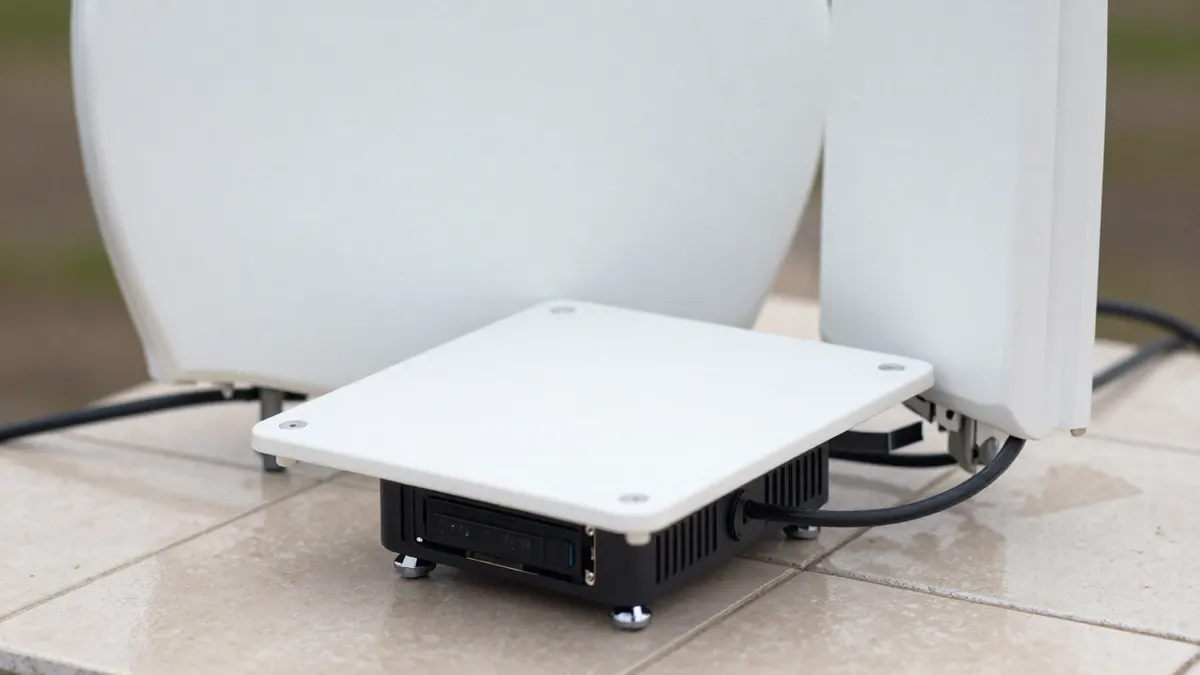
How a tile base antenna mount works
The plate is bedded where a tile or a small group of tiles has been lifted out. The surrounding tiles overlap its edges so water runs over it and not under it. Most plates have four to six holes for screws into a rafter or a batten, and a raised collar or rubber seal around the mast tube.
A 30x30cm footprint is a middle size. It is enough for a mast up to about 1.5 to 2m carrying a fibreglass omni antenna of 1 to 2m in length. Anything taller or heavier needs a larger base or a different fixing.
What you can put on it
- A 5.8dBi to 8dBi fibreglass omni antenna, usually 0.5 to 1.5m long
- A short mast section of 30 to 50mm diameter
- A lightning arrestor and a short run of low-loss coax at the base
Roof types and tile compatibility
These plates suit concrete or clay interlocking tiles of the common 30 to 33cm width. They also work with many plain tiles, though plain tiles need more cutting and flashing. Slate is a poor match. Slates crack easily and the plate will not sit flat, so a ridge or gable fixing is the better route.
Pitch matters. Between 20 and 45 degrees is the comfortable range. On steeper roofs the plate wants to slide and you need to fix into a rafter, not a batten alone.
Wind load and mast height
Wind is what moves a mast, not the weight of the antenna. A 1.5m mast with a 1m fibreglass antenna catches little wind in normal weather, yet gusts of 100km/h are enough to bend a thin pole. Keep the mast above the plate to about 1.5m unless you add stays.
If you need more height, a tile plate is the wrong tool. A chimney bracket or a wall fixing carries tall masts better. A Mast pole clamp 40-60mm is the usual way to join a longer pole to a heavier base, and it spreads the load over two clamp points.
Installing it step by step
Choose the spot first. Aim for the highest part of the roof, a metre or two from the ridge, with a rafter under it. Check that no solar panel, tree or neighbouring chimney sits close, since obstacles within a few metres of the antenna cost more signal than you would expect.
- Lift the tiles and find the rafter or batten.
- Fit the plate, level it, and screw it down with stainless fixings.
- Re-lay the surrounding tiles so they overlap the edges.
- Seal the mast collar with a weatherproof flashing tape or sealant.
- Mount the antenna, then run coax down through a drip loop.
Allow around two hours for a first install. Work only in dry weather, and use a roof ladder and a harness. If you are not comfortable on a roof, pay a roofer for an hour. It is cheap next to a leak.
Alternatives when a tile mount does not fit
Not every house suits a roof plate. For a flat or short-run installation, an Antenna wall mount bracket is simpler, needs no roof work and can sit under the eaves. Where the load is higher, a Heavy duty antenna wall mount with thicker arms handles longer poles and bigger antennas.
Flats and rented homes are another case. A Helium antenna balcony mount clamps to a railing and avoids any change to the building, though you lose some height compared with a roof.
Common mistakes
Mixing metals is the classic one. Steel plates with aluminium or brass screws corrode in a year or two near coastal air. Use stainless fixings and paint any cut edges.
Another is skipping the drip loop. Without it, water follows the cable straight into the enclosure. Also avoid sharing a plate with a satellite dish, because two loads on a small plate double the stress on the screws.
Lastly, check local rules. In some countries a roof-mounted mast over a certain height needs a permission, and rented or listed buildings often need the owner's agreement.
Frequently Asked Questions
Will a tile base antenna mount cause roof leaks?
Not if it is fitted correctly. The tiles must overlap the plate edges and the mast collar needs a proper seal. Check it once a year, ideally after the first winter.
How tall a mast can I fit on a 30x30cm plate?
About 1.5 to 2m above the plate is a sensible limit for a small omni antenna. Taller than that, add stays or choose a wall or chimney fixing. Local wind levels change the answer, so be cautious in exposed areas.
Does it work on slate roofs?
Generally no. Slate is brittle and rarely lies flat enough for the plate to seat well. A ridge, gable or wall fixing is a safer choice.
Do I need to earth the mast?
Yes, a short earth path is good practice, along with a lightning arrestor on the coax. A roof-high metal mast is the first thing a storm finds. Have a qualified electrician check the earthing if you are unsure.