45cm low loss coaxial cable SMA male to N female: what it does and when to use it
A 45cm low loss coaxial cable with an SMA male plug on one end and an N female socket on the other is a short adaptor lead. It joins a LoRaWAN hotspot miner, which usually has an SMA female antenna port, to an outdoor antenna or a bulkhead fitting that uses an N connector. That is the whole job, and at this length it does it with very little signal penalty.
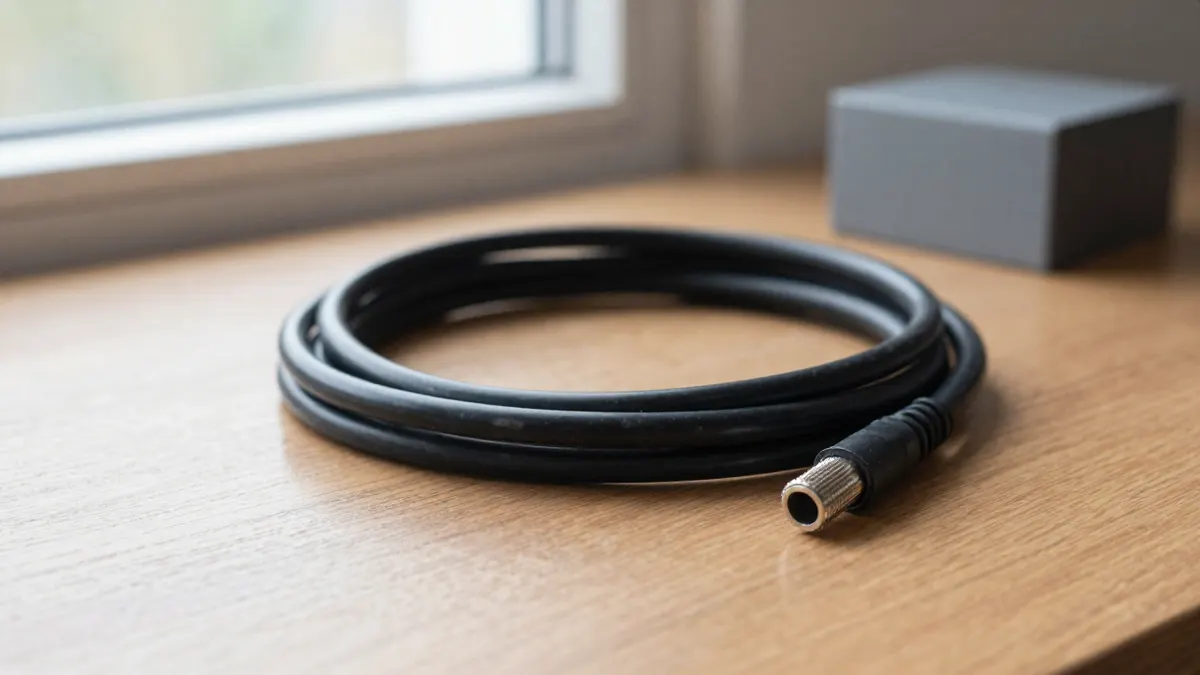
Why the 45cm low loss coaxial cable SMA male N female combination is so common
Most Helium hotspots and LoRaWAN gateways ship with SMA connectors on the casing. Most outdoor fiberglass and collinear antennas use N connectors, because N is larger, sturdier and sealed better against rain. A lead with SMA male and N female ends bridges the two without a chain of adaptors.
Each extra adaptor adds a point of failure and roughly 0.1 to 0.2 dB of loss. One purpose-built cable is cleaner.
How much signal does a 45cm lead lose?
Short runs are forgiving. With a cable in the LMR-195 or RG58 class, loss at 868 MHz sits around 0.1 to 0.15 dB for 45cm. With an LMR-240 class cable it is closer to 0.07 dB. Anything labelled low loss and built on 50 ohm coax will stay well under 0.3 dB including the connectors.
For comparison, 3 metres of cheap RG174 can eat 2 dB or more at the same frequency. That is nearly 40 percent of your power gone before it reaches the antenna.
What to check on the spec sheet
- Impedance of 50 ohm, never 75 ohm (TV and satellite cable will not do)
- Centre pin and thread matching: SMA male has a pin, N female has a socket
- Frequency rating that covers 868 MHz in Europe or 915 MHz in the US
- Gold or nickel plated connectors with a tight crimp
Using it as a window pass through
People often ask whether a lead this short can carry a signal through a window. It can, if the window has a gap or a thin flat section. Flat, foil-style cables are made for that purpose, and a Window pass through cable SMA suits a frame that cannot be drilled. A round 45cm lead, by contrast, is too thick to pinch in a closed window without damaging the jacket or the seal.
If you place the antenna just outside a window, a Helium antenna window cable setup is the better fit, since it is designed to cross the frame cleanly. Use the 45cm lead on the inside, between the miner and the pass through.
Bulkhead mounting and weatherproofing
Where you can drill a wall or an enclosure, an N-female to N-female bulkhead adaptor lets the cable stay indoors while the antenna sits outside. In that case your short lead needs an N female end to match a male antenna cable, or you add the adaptor between them. Check which gender you hold before planning the run.
Outdoors, wrap every N joint with self-amalgamating tape, then a layer of vinyl tape. Water in a connector is the most common cause of a hotspot that suddenly loses range after a wet month.
Comparing with other short leads
Lengths from 30 to 50cm are the usual range. A Mcgill 40cm coaxial cable is a close alternative and behaves almost the same in loss terms, so the choice comes down to connector types and how far your miner sits from the mounting point. Fifteen centimetres of difference rarely matters for signal, but it can matter for a tight bend. Do not bend coax tighter than about 5 times its outer diameter, or the shield deforms and loss rises.
Practical setup tips
- Turn the hotspot off before connecting or removing any antenna.
- Hand-tighten the SMA nut, then add a quarter turn at most. Pliers can strip the thread.
- Support the cable so its weight does not hang on the miner's port.
- Keep the lead away from power adaptors and Wi-Fi routers to limit noise.
Prices for this kind of lead are usually around 8 to 20 euros depending on cable grade and brand. Treat that as a rough guide only.
Frequently Asked Questions
Can I use a 45cm lead to move my antenna a long way from the hotspot?
No, 45cm only gives you a little flexibility. For a mast or roof position several metres away, use a thicker low loss cable such as LMR-400, and keep the total run as short as you can. Every extra metre of thin coax costs signal.
Does the cable work for both 868 MHz and 915 MHz?
Yes. Quality 50 ohm coax covers both bands, and the difference in loss between them is tiny. What matters is that your antenna is tuned to your regional band.
Will a short cable damage my hotspot if the antenna is missing?
Running a transmitter with no antenna or a badly mismatched load can harm the radio stage. Connect the antenna and cable before powering on, and check that nothing is loose.
How do I know the cable is faulty?
Signs include a wobbly connector, a kinked jacket, falling packet counts or a much weaker range than before. A basic continuity test with a multimeter between centre pins, and between shells, shows an open circuit or a short.