12 dBi Helium Antenna for EU868 Outdoor Hotspots
A 12 dBi Helium antenna for the EU868 band is a high-gain outdoor unit, usually a fibreglass collinear or a flat directional panel, tuned to roughly 863 to 870 MHz. It pushes more of the signal toward the horizon than a standard 3 to 5 dBi whip. That sounds like a pure win. It is not always one, and the reasons are worth knowing before you climb a roof.
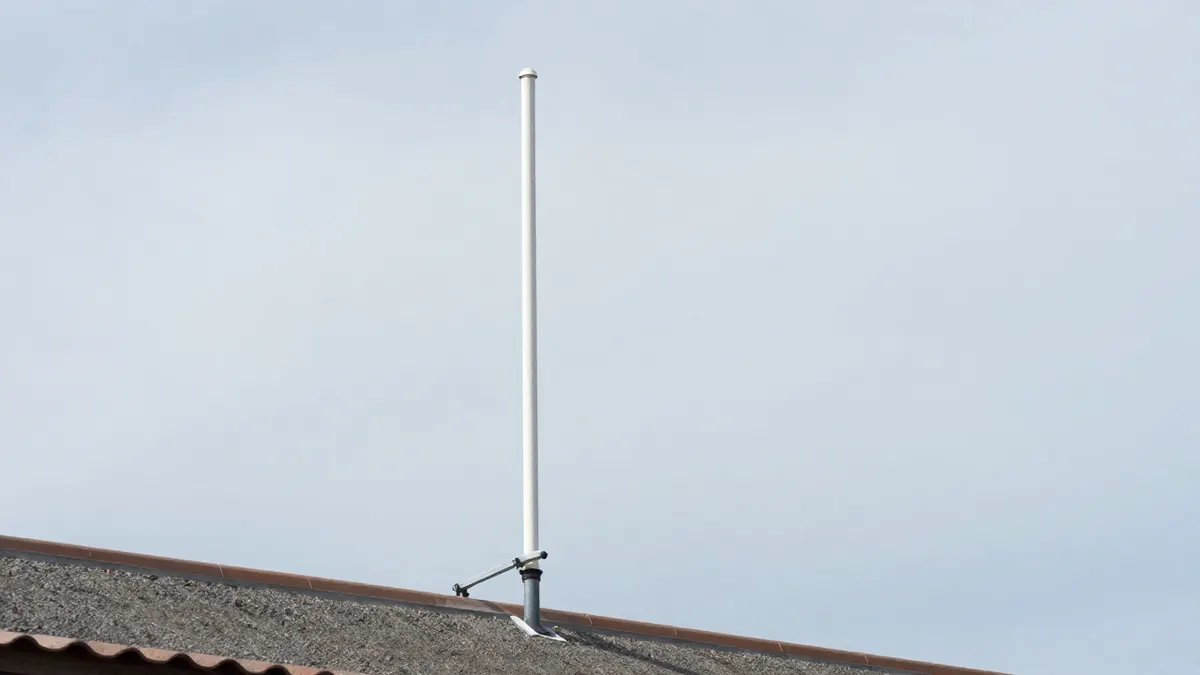
What 12 dBi actually means on a LoRaWAN hotspot
The figure describes how the antenna focuses energy, not how much power it creates. A hotspot still transmits at the same level. The antenna just squeezes the pattern flatter.
An omnidirectional 12 dBi collinear is long, often 1.2 to 1.5 metres, because the gain comes from stacking several radiating elements. The vertical beamwidth shrinks to about 6 to 8 degrees. Sitting on a tall mast above a flat plain, that is fine. Placed in a hilly town or on a high tower block, nearby streets and distant neighbours fall outside the beam, and you can lose coverage you used to have.
Where a 12 dBi antenna makes sense
Flat terrain is the clear case. Think polders, farmland, coastal areas, or a rooftop with a clean line to the horizon. In those spots, a well-mounted 12 dBi collinear can reach sensors 10 to 15 km away in open conditions, against perhaps 5 to 8 km for a 5 dBi stub.
It also helps when the hotspot sits indoors or in a cabinet and the antenna must be moved outside on a cable. Gain can offset a small part of that cable loss.
- Open ground with few buildings between you and the devices
- Mast mounting at 6 metres or more above the surrounding roofs
- A rural gateway meant to hear distant, low-powered sensors
- Installations where the antenna can be kept perfectly vertical
When a lower gain works better
In dense cities, more gain often hurts. Signals arrive from many angles, including below the antenna, and a narrow beam ignores them. Many urban operators get better results from 3 to 6 dBi.
If you want a middle step, a 10 dBi Helium antenna keeps a slightly wider vertical pattern and is less fussy about mounting height. For a directional setup aimed at a known cluster of devices, a 9 dBi helium panel antenna covers a wide sector with a shorter, easier body to fix to a wall.
Omnidirectional versus panel at 12 dBi
A 12 dBi panel antenna works differently. It aims forward across a sector, typically 60 to 90 degrees wide horizontally, and rejects what is behind it. That helps when one side faces a valley and the other a wall or a noisy source.
The trade is simple. Collinear gives 360 degree coverage and needs height. Panel gives pointed coverage and needs correct aim. Pick the panel only if you know where your devices are.
Cable, connectors and mounting
Cable loss can erase the extra gain. Thin RG58 loses around 0.5 to 0.7 dB per metre at 868 MHz, so a 10 metre run can eat 5 to 7 dB. LMR400 or similar low-loss cable drops that to about 1 dB over the same length. Keep runs short and connectors few.
Use N-type connectors outdoors and seal every joint with self-amalgamating tape plus a layer of vinyl tape. Add a lightning arrestor and ground the mast. Water in a connector is the most common cause of a sudden range drop after a few months.
Mount the antenna at least one metre away from metal pipes and other masts, and check that the tuning is truly for EU868. A 915 MHz antenna sold for the US will work badly here.
Regulatory limits in Europe
Across most of the EU868 band, the permitted effective radiated power is about 14 dBm for the main sub-bands, with some channels allowing up to 27 dBm. A high-gain antenna combined with the hotspot output and cable loss can push you over the limit. Check your total: transmit power, plus antenna gain, minus cable loss. Local rules differ, so confirm yours.
Frequently Asked Questions
Is a 12 dBi antenna always better than a 5 dBi one?
No. It reaches further on flat ground but has a thinner vertical beam. In hilly or dense areas, a lower gain model often hears more devices.
What mounting height does a 12 dBi collinear need?
Aim for at least 6 metres above surrounding rooftops or trees. Below that, much of the extra gain is blocked by obstacles and the narrow beam gives little advantage.
Can I use a 12 dBi antenna indoors?
You can, but it is rarely worth it. Walls absorb signal, and a long antenna is hard to keep vertical inside. Outdoor mounting gives far better results.
How much does a 12 dBi EU868 antenna cost?
Prices start at around 40 to 60 euros for basic fibreglass models, and quality units with mounting hardware often run 80 to 120 euros. Low-loss cable and lightning protection add another 30 to 60 euros.