9 dBi Helium Panel Antenna for EU868 Hotspots
A 9 dBi Helium panel antenna is a directional LoRa antenna tuned for the 863 to 870 MHz band used across Europe. It concentrates the signal into a wedge of roughly 65 degrees horizontally, so a hotspot mounted on a wall or mast covers one side of the building far better than a stock whip would.
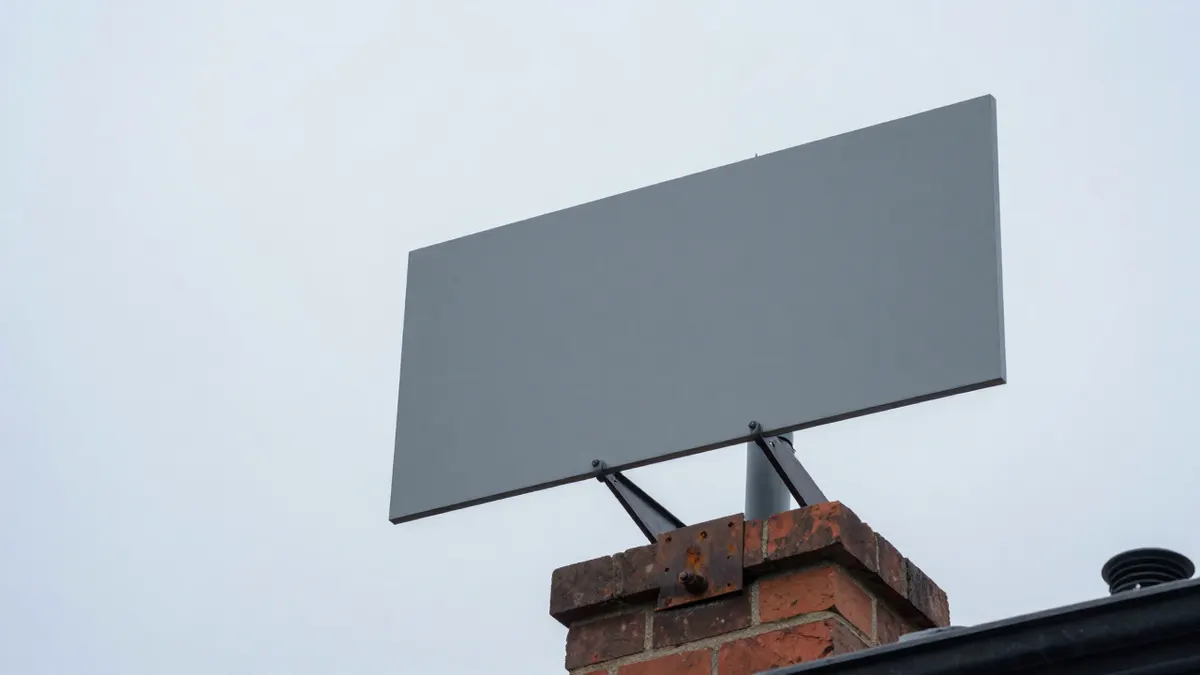
Typical size is about 25 by 25 cm, with weight under 1 kg. Most units ship with an N-female connector and a fixed bracket for pole or wall mounting.
Key specifications to check
- Frequency range: 863 to 870 MHz (EU868)
- Gain: 9 dBi, with a vertical beamwidth near 60 degrees
- Impedance: 50 ohm, VSWR below 1.5
- Polarization: vertical
- Connector: N-female, usually
- Rated for outdoor use, IP65 or better
Check the frequency label first. A US915 panel looks identical and will perform badly on European hotspots. Prices for a 9 dBi panel usually start at around 30 to 50 EUR, though cable and adapters add to that.
When a 9 dBi panel antenna makes sense
Panels suit locations where the devices you want to hear sit in one direction. Think of a house on the edge of a village facing the valley, or a flat on a hillside where the back wall faces rock.
If coverage is needed all around, a panel is the wrong tool. An omnidirectional model gives up gain for even spread, and the 8 dBi outdoor antenna is a more natural pick for a rooftop with sensors on every side.
Go higher in gain and you narrow the beam further. The 12 dBi panel antenna reaches a little farther but is fussier to aim, and in hilly terrain the tighter lobe can miss nearby nodes entirely. For most home hotspots, 9 dBi is the safer middle.
Expected range with a 9 dBi Helium panel antenna
In a built-up area, expect about 1 to 3 km of useful reach in the aimed direction. With a clear line of sight over open ground, 8 to 15 km is realistic, and a few exceptional links go beyond that.
Height matters more than gain. Moving the antenna from 3 m to 10 m above ground often does more than adding 3 dB would. Trees, concrete and metal roofs eat the signal fast, so a spot clear of them beats a stronger antenna hidden behind them.
Cable loss is the silent killer
Every metre of thin coax bleeds signal. At 868 MHz, RG58 loses roughly 0.5 to 0.6 dB per metre, while LMR400 loses closer to 0.15 dB. A 10 m run of RG58 would cancel most of the antenna's gain. Keep the cable short, or choose a low-loss type if it must be long.
Mounting and aiming
Mount the panel vertically, with the connector pointing down, so the polarization matches most LoRa sensors. Tilt it slightly downward only if your targets sit well below you, by 5 degrees at most.
Aim it toward the area with the most devices or the nearest high-value gateways, then check witness and packet counts over a few days before adjusting. Small moves of 10 to 15 degrees can change the results noticeably.
For flats, a balcony mast antenna mount keeps the panel clear of the railing and the wall. Use a mast at least 50 cm above the balcony edge, and ground the setup properly if it sits higher than the surrounding roofs.
Common mistakes
- Placing the panel indoors behind a window with metallic coating
- Using a long, cheap cable that wastes the gain
- Skipping weatherproof tape on the N connector, which lets moisture in within a season
- Pointing the back of the panel at the target area
Also check local rules. EU868 limits radiated power, commonly around 14 dBm ERP on much of the band, so a higher gain antenna can require a lower transmit setting on the hotspot to stay legal.
Frequently Asked Questions
Will a 9 dBi panel antenna work on any LoRaWAN hotspot?
It works with any hotspot that has an external antenna connector and runs on EU868. You may need an adapter, for example SMA to N, and the cable should be short and low-loss.
Is a panel antenna better than an omnidirectional one?
Only when your targets are in one direction. A panel gives more gain that way, but it hears very little behind it. For all-round coverage, an omnidirectional model is simpler and more predictable.
Can I use it indoors?
Yes, near a window facing the target area, though walls and coated glass cut the signal by several dB. Outdoors on a wall or pole at a good height almost always performs better.
How high should I mount it?
As high as practical, ideally above nearby roofs and trees. Even 3 to 5 extra metres can noticeably widen your reach, provided the cable run stays short.