LMR-400 N-Female to SMA-Male Cable: What It Is and When to Use It
An LMR-400 N-female to SMA-male cable has a female N socket on one end and a male SMA plug (a pin in the centre) on the other. It joins a hotspot miner with an SMA-female antenna port to an outdoor antenna that ends in an N-male plug. The coax between them is 50 ohm, about 10 mm thick, and loses far less signal than the thin RG58 or RG174 leads that ship with most gear.
Check the gender on both devices before anything else. Most mistakes with this cable come from that.
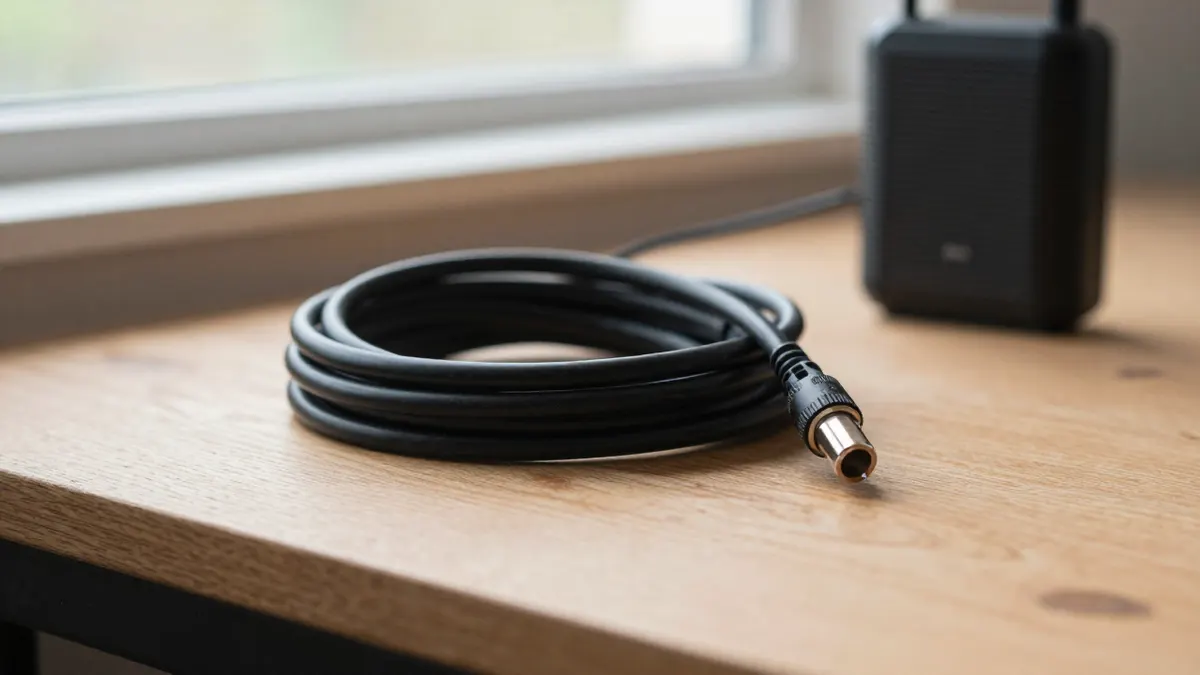
LMR-400 N-Female to SMA-Male: Connector Gender Explained
Standard SMA male has a threaded nut and a centre pin. Standard SMA female has a hole in the centre. Your miner needs to show a pin-less socket (female) for this cable to fit. The N-female end then expects an antenna with an N-male plug, which is the usual finish on fibreglass omni antennas and many Yagi models.
A lot of LoRa hardware sold in Europe uses reverse polarity SMA (RP-SMA), where the pin and the thread are swapped. A reverse polarity port will not mate with a standard SMA plug, even though the two look almost identical. If your miner has that port, look at the LMR-400 N-male to SMA-RP or the LMR-400 N-female to SMA-RP variant instead, depending on which end your antenna uses.
Signal Loss Over Different Lengths
LMR-400 loses roughly 0.22 dB per metre at 868 MHz, the main LoRaWAN band in Europe. That is about half the loss of RG58 at the same frequency. Rough figures:
- 3 m: around 0.7 dB
- 5 m: around 1.1 dB
- 10 m: around 2.2 dB
- 15 m: around 3.3 dB
Each 3 dB lost halves your power. So a 15 m run throws away half the signal before the antenna even sees it, and you should avoid it unless the roof position makes a real difference. The connectors add a little more, usually 0.1 to 0.2 dB per pair.
Is LMR-400 the Right Cable for a Helium Hotspot?
For runs between 3 and 10 m, yes. Moving the antenna to a roof, mast or high window often adds more range than any gain upgrade, and a low-loss cable keeps that advantage. For under 2 m, thinner cable is fine and far easier to route.
LMR-400 is stiff. The minimum bend radius is about 25 mm for a fixed install, and a tight kink permanently damages the dielectric. Plan the route so the cable curves gently out of a window frame or wall entry point.
Many buyers also compare it with an HHS-400 antenna cable, which is built to a similar low-loss standard and uses the same thick 50 ohm construction. Check the datasheet attenuation figure at 868 MHz rather than trusting the name on the jacket.
Installation Tips
- Seal outdoor N connectors with self-amalgamating tape, then a layer of vinyl tape. Water inside an N connector is the most common cause of a cable failing within two years.
- Add a drip loop just below the antenna so rain does not run along the cable into the joint.
- Do not tighten SMA with pliers. Finger tight plus a quarter turn is enough.
- Keep the hotspot indoors if you can, and run only the antenna cable outside.
- Check local rules on antenna gain and transmit power. In the EU 868 band the limits are set in effective radiated power, so a long, lossy cable and a high gain antenna can partly cancel out.
Typical Prices
Assembled LMR-400 jumpers with these connectors usually cost from about 15 to 20 euros for 1 m, and around 25 to 45 euros for 5 m, depending on the connector plating and brand. Very cheap listings often use a thinner copy-cable that is labelled "400 type" but loses more. Those figures are only a guide.
Frequently Asked Questions
Can I use this cable with a 2.4 GHz or 5 GHz antenna?
You can, but the loss climbs quickly. At 2.4 GHz, LMR-400 loses about 0.7 dB per metre, so a 10 m run costs around 7 dB. For Wi-Fi it is better to keep the cable short or move the radio closer to the antenna.
Does the SMA end need to be male or female?
It depends on the port on your miner. If the miner shows a centre pin, you need an SMA-female cable end. If the port has a hole in the middle, which is the more common case, you need SMA-male as on this cable.
How long can the cable be before it hurts coverage?
Staying under 10 m keeps the loss around 2 dB or less at 868 MHz. Past 15 m the loss is high enough that a higher mast position may not pay for itself.
Is an adapter plus a short jumper a good alternative?
Not usually. Each extra connector pair adds loss and another point where water can get in. A single cable with the right two ends is cleaner and more reliable.