PoE Splitter 48V to 5V Micro USB: What It Does and How to Choose One
A PoE splitter 48V to 5V micro USB takes the Power over Ethernet feed from a switch or injector and turns it into a 5V supply on a micro USB plug. One Ethernet cable then carries both data and power to a small device. The splitter sits at the far end, and it typically outputs 5V at up to 3A, so about 15W.
That 3A figure matters. Many cheaper units are rated 2A or less, and a device that spikes during boot can brown out on them.
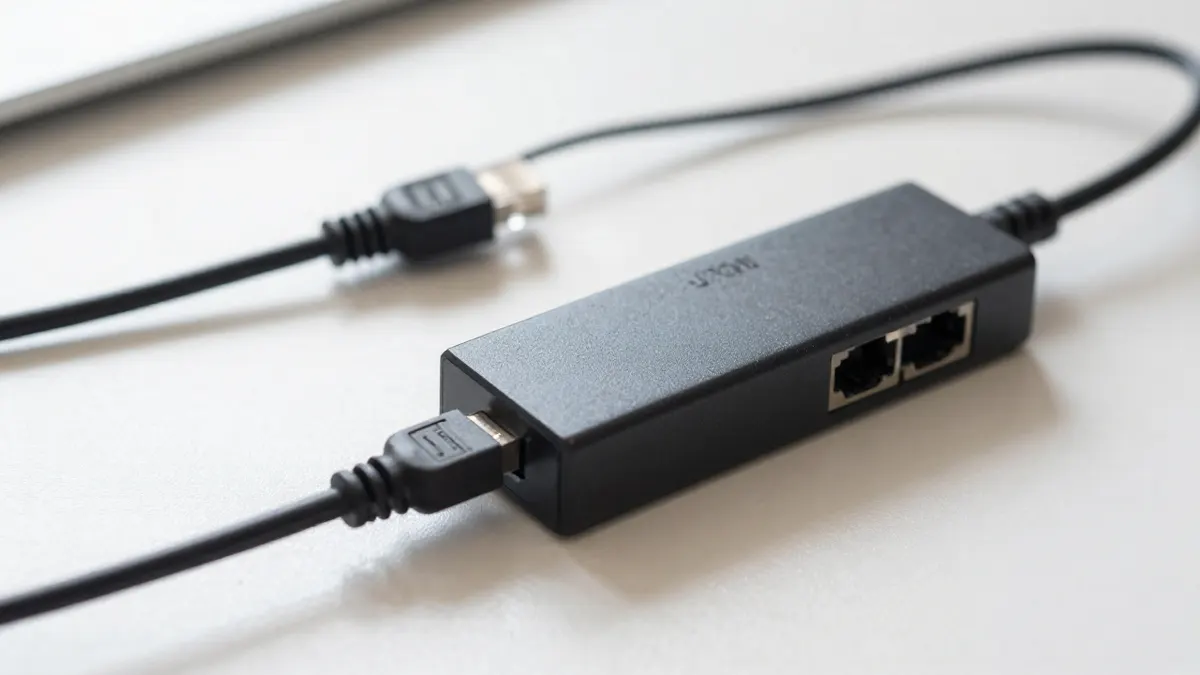
How a PoE splitter 48V to 5V micro USB works
The input side has an RJ45 port. It accepts passive PoE at 48V, and many models also accept 802.3af active PoE, which negotiates voltage with the switch. Inside, a DC-DC converter steps the voltage down to a stable 5V. The output is a short micro USB lead, plus a second RJ45 port that passes the data on to the device.
Check the label before you connect anything. A 48V feed into a device wired directly for 5V will destroy it in a second.
Passive or active PoE
Passive PoE sends power all the time, without any handshake. Active PoE (802.3af/at) only powers the port after the splitter identifies itself. Active is safer with mixed gear, since a laptop plugged in by mistake will not be fried. Passive is common on older injectors and many LoRaWAN hotspot power supplies. If your source is passive 48V, make sure the splitter accepts it.
Which devices suit a micro USB splitter
Micro USB power is found on single board computers like the Raspberry Pi 3 and earlier, small gateways, IP cameras, and some older LoRa boards. Newer boards have moved to USB-C, which needs a different plug and often a higher current. In that case look at a PoE splitter 48V 5V USB-C instead.
A few examples of what a 5V 3A budget handles well:
- A Raspberry Pi 3B+ with a LoRa concentrator HAT (around 5 to 8W under load)
- A compact outdoor gateway with a 4G backup modem
- A small IP camera or access point that asks for 5V
A Raspberry Pi 4 or 5 is a poor match. They want more current and a USB-C connector, and a micro USB adapter will trigger undervoltage warnings.
Cable length and voltage drop
Ethernet is rated for 100 m, and PoE works over that distance. But the cable itself has resistance, and a 48V feed loses a few volts over a long run. This is why PoE is used at all: carrying 5V directly over 50 m would fail, while 48V barely notices.
Use solid copper Cat5e or Cat6 for outdoor runs. Copper-clad aluminium cable looks fine on the shelf and performs badly beyond 30 or 40 m.
Powering a Helium hotspot with PoE
Some LoRaWAN hotspot miners take 5V through micro USB, and a splitter lets you place them on a roof or mast with a single cable. Check the miner's rated draw first. Most sit between 5W and 12W, which a 3A splitter covers with room to spare.
On the source side, you need a matching injector. A PoE injector 48V helium setup is the usual pairing, with the injector near the router and the splitter at the miner. If your device wants 12V rather than 5V, see the PoE splitter 48V to 12V option, and for a plain barrel-jack 5V device, the PoE splitter 48V to 5V version fits better.
What to check before choosing
- Output current: 3A is a safe target, 2A is the minimum for most boards
- Input voltage range: 48V passive, or 802.3af compliant
- Connector: micro USB, not USB-C or a barrel plug
- Ethernet speed: some splitters are limited to 100 Mbps, which is fine for hotspots but not for faster links
- Weather rating: indoor plastic cases are not made for rain, so use an enclosure outdoors
Ripple is the hidden spec. A noisy 5V line can cause random reboots or radio interference on LoRa boards. Splitters with an isolated converter are usually quieter, and they are worth the few extra euros (many sell from around 10 to 20 EUR).
Frequently Asked Questions
Can I use a PoE splitter 48V to 5V micro USB with any PoE switch?
Only if the voltages match. An 802.3af switch works with a splitter that supports active PoE. For a passive 48V injector, the splitter must say it accepts passive 48V input.
Is 5V 3A enough for a Raspberry Pi?
It is plenty for a Pi 3B+ and older models, which draw under 2.5A at peak. A Pi 4 or 5 needs a USB-C splitter with a stable 5V at 3A or more.
How far can I run the Ethernet cable?
Up to 100 m with good copper cable. Beyond that, the data signal fails first, and the voltage at the splitter drops well before that on poor cable.
Will the splitter get hot?
It will get warm, since the converter wastes some energy as heat, often 10 to 15 percent. If it is too hot to hold at moderate load, the unit is undersized or poorly ventilated.