PoE Splitter 48V to 12V: What to Check Before You Pick One
A PoE splitter 48V to 12V takes power and data from a single Ethernet cable and hands them to a device on two separate outputs: an RJ45 port for data and a DC barrel plug delivering 12 V. It is the usual fix when a hotspot, camera, router or sensor gateway sits on a roof or in a mast box where no mains socket exists.
Most units accept 44 to 57 V from the switch or injector and output a regulated 12 V at 1 to 2 A. That gives 12 to 24 W, enough for many small devices.
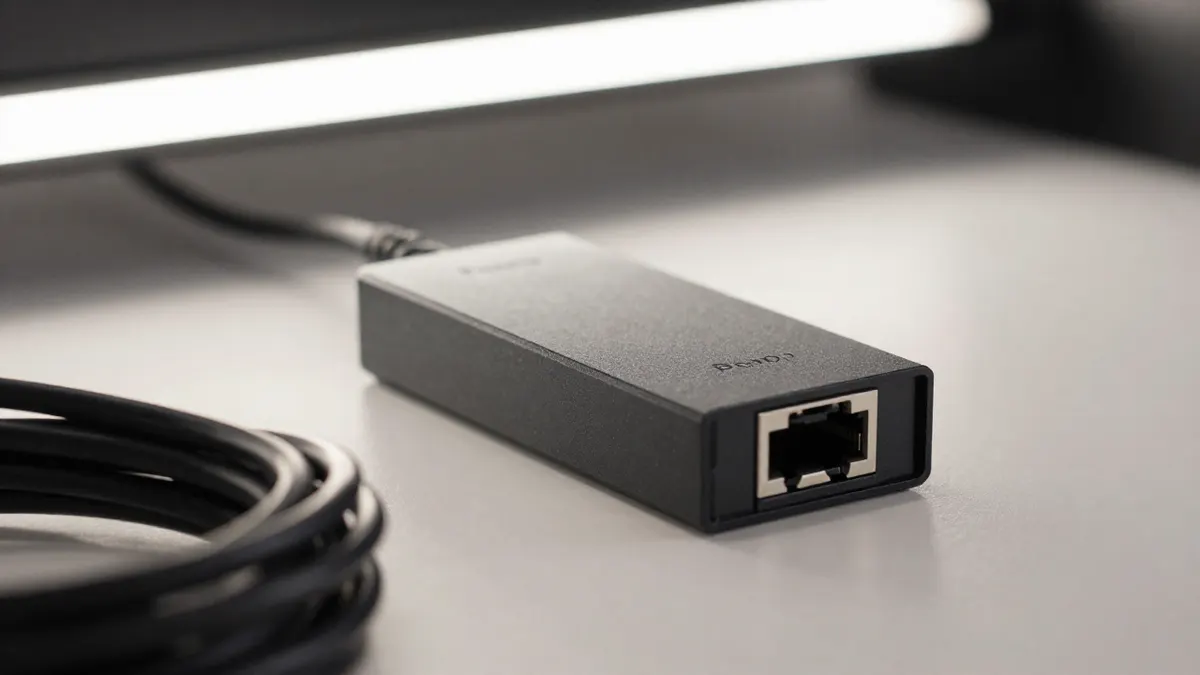
How a 48V to 12V PoE splitter works
The splitter pulls voltage from the Ethernet pairs, drops it with a small converter, and passes the data pairs through to the RJ45 output. Cheap models use passive wiring and only work with passive PoE. Better ones negotiate with the source first, so they handle 802.3af (up to 15.4 W at the source) and 802.3at (up to 30 W) equipment.
Efficiency sits around 85 to 90 percent. A splitter rated 12 W of output will therefore draw roughly 14 W from the line.
Matching the splitter to your device
Check three numbers on your device label: voltage, current, and plug size. A common barrel is 5.5 x 2.1 mm, but 5.5 x 2.5 mm exists too. Centre-positive is the standard, though some gear is reversed, and a wrong polarity can kill a board in a second.
- Voltage must read 12 V, with a tolerance of about 5 percent.
- Splitter current should be at least 20 percent above the device draw.
- Gigabit data needs a splitter that passes all four pairs, not only 10/100.
- Outdoor use calls for a sealed case or a weatherproof box.
A typical indoor LoRaWAN gateway pulls 3 to 6 W, so a 12 V 1 A splitter is plenty. A PTZ camera with heater may want 2 A or more, and then the splitter, not the cable, becomes the limit.
Cable length and power loss
Ethernet PoE works up to 100 m on Cat5e or Cat6. Past that, voltage drop and data errors appear. With 48 V on a thin copper-clad cable, losses grow faster than people expect, so pick solid copper when the run exceeds 50 m.
Passive 24 V systems suffer more over distance. A 48 V feed is friendlier, which is a good reason to stay with it and let the splitter do the step-down at the far end.
Picking the power source
Your splitter needs a matching source upstream. A PoE switch does the job when you have several devices. For a single link, a 48V PoE injector sits between your router and the cable and costs from about 10 to 20 EUR. Confirm the injector outputs standard 48 V, not 24 V, or the splitter may never start.
If you only mix 12 V and 5 V devices, a second splitter is common. Our guide to a PoE splitter 48V to 5V covers the lower-voltage side, and for phones or small boards a PoE splitter 48V 5V USB-C avoids the barrel plug entirely.
Installation tips that save trouble
Test everything on a bench before climbing a mast. Plug in the injector, run a short patch cable to the splitter, and measure the output with a multimeter. You want between 11.5 and 12.5 V under no load.
Then connect the device. If the reading sags below 11 V under load, the splitter is too weak or the cable is too long.
Outside, drip loops matter. Water follows the cable into the connector. Keep the splitter in a box with the cable entering from below, and use shielded cable grounded at one end where lightning is a risk. Surge protection at the injector side costs around 8 to 15 EUR and is cheap insurance.
Common problems
The device does not power up
Check polarity first, then the source voltage. A passive splitter on an 802.3af switch often fails because no handshake happens, and the switch then supplies nothing.
The link drops at 10 Mbps or 100 Mbps
Usually a damaged pair or a poor crimp. Replace the cable end before blaming the splitter.
Frequently Asked Questions
Can I use a 48V to 12V splitter with any PoE switch?
Most work with standard 802.3af and 802.3at switches. Passive-only models need a passive injector instead. Read the datasheet for the supported input range.
How much power can a 12V PoE splitter deliver?
Typically 12 to 24 W at the output, depending on the model and the source budget. Always leave a margin of about 20 percent over the device draw.
Does it work over 100 metres?
The Ethernet standard stops at 100 m. Some setups push a bit further with a repeater or extender, but speed and power will drop, so plan for the limit.
Is the splitter isolated?
Many are, which protects devices from ground loops. Look for an isolation rating, often 1.5 kV, when you connect gear on different buildings.