100cm Window Pass Through Antenna Cable (SMA-RP)
A 100cm window pass through antenna cable is a thin, flat lead that lets you run an antenna connection through a closed window without drilling anything. The cable is about 1 metre long, ends in SMA-RP connectors, and the flat section is only around 0.3 to 0.5 mm thick, so the window frame closes on it without a gap.
People use it mostly for LoRaWAN hotspot miners. The unit sits on a desk indoors, the antenna sits outside on the sill or the frame, and the cable bridges the two.
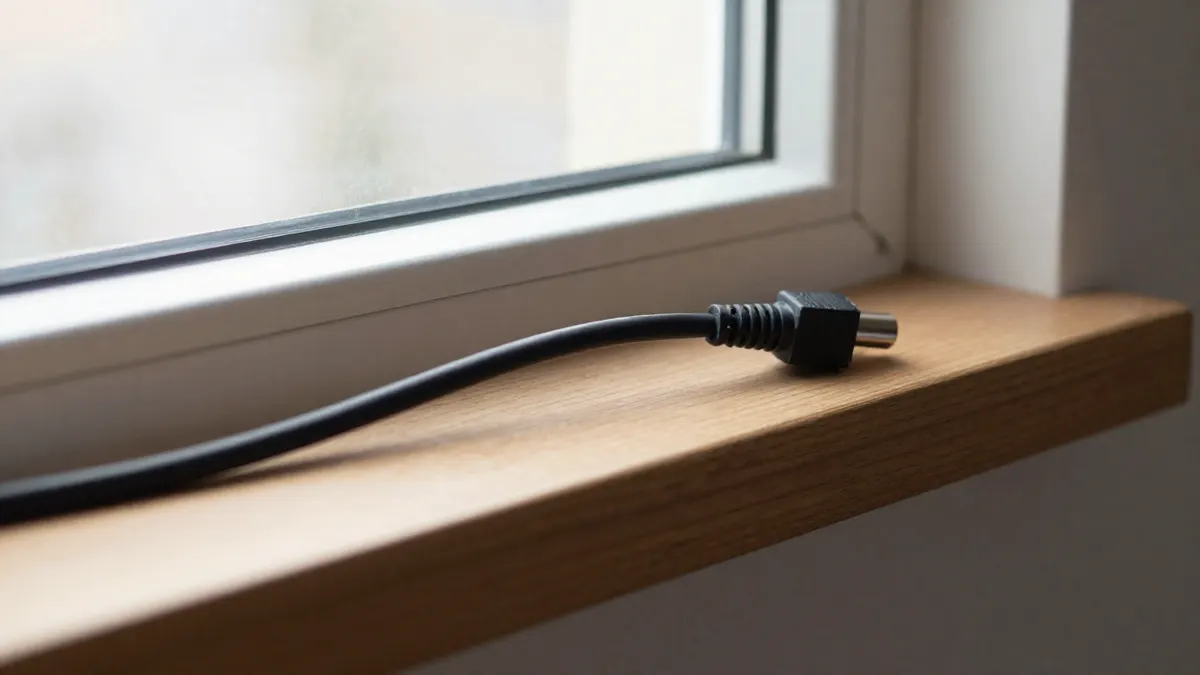
What the 100cm window pass through antenna cable is made for
Glass and metal-coated windows weaken radio signals badly. An antenna placed behind a double-glazed pane can lose a noticeable share of its range, especially at 868 MHz in Europe, where energy-saving glass with a metallic layer is common. Moving the antenna outside fixes most of that.
The flat design is the whole point. A round coax cable pinched in a window seal gets crushed, and a crushed cable changes its impedance and reflects power back. A flat cable is built to sit in that gap.
Connector type
SMA-RP (reverse polarity) is the standard on most hotspot miners and many outdoor antennas. Check the centre pin before anything else. SMA-RP has a female-looking socket with a pin in the plug, and a normal SMA will not mate properly with it. Forcing the wrong pair damages the thread and the contact.
How much signal you lose over 1 metre
Flat window cables lose more than thick low-loss coax. Expect roughly 0.5 to 1.5 dB over a metre at 868 MHz, depending on construction. That is acceptable for a single short run. It adds up if you chain several adapters or extensions, so keep the number of joints low.
If your miner sits right beside the window, a shorter lead is usually the better choice. A 50cm window pass through cable halves the cable loss and is easier to hide. Choose the 100cm length when the device is a little further from the glass, or when you need to reach a sill that is off to one side.
Routing the cable through the window
Pick the point where the frame closes against the seal, usually the hinge side or the bottom edge. Lay the flat section across the seal, close the window, and check it holds without a visible gap.
- Avoid sharp bends. Keep a radius of at least 2 to 3 cm on the flat part.
- Do not fold the cable along its width, since that breaks the inner conductor.
- Leave a small drip loop outside so rain does not run along the cable into the connector.
- Wrap outdoor connectors in self-amalgamating tape for weather protection.
Windows that tilt and turn can put stress on the cable each time you open them. Take the lead out for daily airing, or place it on a fixed pane or a small side window you rarely open.
Choosing the antenna that goes with it
A 3 to 6 dBi omnidirectional antenna is the usual pairing for a hotspot at a window. Higher gain narrows the vertical beam, which hurts in hilly areas or when the antenna is on an upper floor. Our Helium antenna window cable overview covers which setups fit which antenna sizes.
Outside the window, keep the antenna vertical and away from metal gutters, shutters and drainpipes by at least 20 to 30 cm. Metal nearby distorts the pattern more than most people expect.
Other cable options when a window is not the route
If you have a gap to cross without a window, such as a door frame or a wall hole, a round cable may suit better. A Flat coaxial cable SMA-RP works in similar tight spots, and a 15cm low loss coaxial cable is handy as a short jumper between the miner and a panel connector or lightning arrestor.
Frequently Asked Questions
Does a flat window cable work with any hotspot miner?
It works with any device that has an SMA-RP antenna port and operates in the sub-GHz LoRa band. Check the connector gender on both the miner and the antenna before choosing the cable.
Will the window seal still keep out drafts and rain?
Mostly yes. The flat section is very thin, so a standard rubber seal closes over it. Some air may pass in strong wind, and a thin strip of tape on the inside edge helps.
Is 100cm too long for a hotspot?
Not usually. One metre of flat cable costs roughly 1 dB or a little more. If the miner is next to the window, a shorter cable reduces that loss further.
Can I extend the cable with a second one?
You can, but every joint adds loss and a weak point. Two flat cables joined together may lose 2 dB or more. Moving the miner closer to the window is a better fix.