Times Protect Lightning Protection, N-Female to N-Male: What It Does and How to Fit It
A Times Protect lightning protection unit is a small coaxial surge arrester that sits between your outdoor antenna and the hotspot. The N-female to N-male version screws straight into an N-type cable run, so a strike or a nearby static surge is diverted to ground before it reaches the radio. For a Helium LoRaWAN hotspot with a roof or mast antenna, it is one of the cheapest ways to protect hardware that costs several hundred euros.
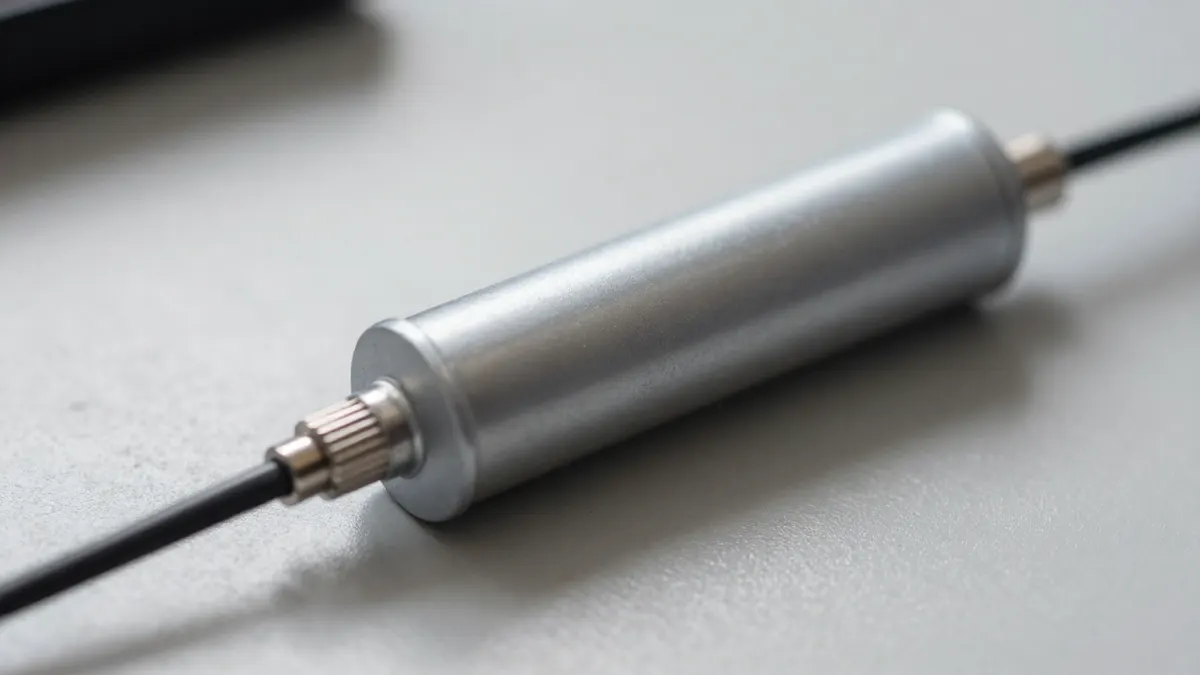
How a coaxial lightning arrester works
Inside the body, a gas discharge tube sits across the centre conductor and the housing. At normal signal levels it does nothing. When voltage spikes above a threshold (often around 90 V for a DC-blocking model, depending on the design), the gas ionises and shunts the surge to the metal body, which must be grounded.
That last point matters. An arrester without a good ground wire is a decoration.
It cannot stop a direct hit on the antenna itself. What it handles well is the induced surge that travels down the cable when lightning lands nearby, and that is the far more common event.
Times Protect lightning protection N-female to N-male: what the connectors mean
The N-male end plugs into the N-female socket of the device or of a jumper, and the N-female end takes the cable coming from the antenna. Check your own chain before ordering anything, because many hotspots have an SMA port and need an adapter first. If your gear is SMA, the Lightning protection SMA-male to SMA-female version fits that port directly and avoids an extra adapter, which would add loss.
The site covers the N-type version in more detail on the page for Lightning protection N-female to N-male, including connector variants.
Typical specifications to expect
- Frequency range: roughly DC to 6 GHz, which covers 868 MHz EU LoRa comfortably
- Insertion loss: usually under 0.2 dB at 868 MHz
- Impedance: 50 ohm
- Surge current: commonly 10 kA to 20 kA (8/20 µs pulse)
- Housing: nickel or brass, with a ground lug or threaded bulkhead for earthing
An insertion loss of 0.2 dB costs you about 4 to 5 percent of signal power. That is negligible next to a long run of thin coax, which can lose 3 dB or more over 10 metres.
Where to place it in the antenna chain
Fit it as close as practical to where the cable enters the building, ideally within 1 metre of the entry point, and bond it to the same earth as the mast or the electrical installation. The order is simple: antenna, outdoor coax, arrester, short indoor jumper, hotspot.
If the wall has no room for a grounded arrester, a panel-mounted N-female to N-female bulkhead adaptor lets you pass through the wall cleanly and put the arrester on the inside, as long as the earth wire stays short and straight. Long, looped earth wires reduce protection sharply.
Grounding tips
Use at least 6 mm² copper wire for the earth lead, and keep it under 2 metres where you can. Clean paint or oxide from the contact point. Seal outdoor N connectors with self-amalgamating tape, since moisture in a connector causes more failures than surges do.
Combining it with a filter
If a neighbouring cell tower or pager network saturates your receiver, a SAW bandpass filter EU868 can sit in the same chain. Put the arrester closest to the antenna and the filter after it, so the filter is protected too. Total added loss for both usually stays under 1.5 dB.
When it is worth it
Any antenna mounted above roof level, on a mast, or on a gable end is a candidate. A window-mounted antenna in a dense city block is much less exposed, and many owners skip protection there. My view: if the antenna is the highest metal object on the property, add the arrester. Prices for this kind of unit start at around 15 to 40 euros, far less than a replaced concentrator board.
Frequently Asked Questions
Does a lightning arrester reduce my Helium hotspot range?
Only slightly. A quality arrester adds about 0.1 to 0.2 dB of loss at 868 MHz, which is not noticeable in real coverage. Poor connectors or water inside them will cost far more.
Can I use it without a ground wire?
No. The arrester diverts energy to its body, so it needs a low-resistance path to earth. Without one, the surge looks for another path, usually through your hotspot.
Will it protect against a direct lightning strike?
No device can promise that. It limits induced surges on the cable. For a direct strike you need a proper lightning rod system on the mast, plus grounding and bonding.
Should it be replaced after a storm?
Yes, if a surge was suspected. Gas discharge tubes wear out after large events, and a unit that has taken a hit may no longer protect. Test continuity and signal loss, or swap it as a precaution.