Which Outdoor Helium Antenna to Buy for Your Hotspot
If you only want the short answer: for most European rooftops and balconies, a fiberglass omnidirectional antenna in the 5 to 8 dBi range on the EU 868 MHz band is the right choice. Which outdoor Helium antenna to buy depends mostly on your terrain, not on the biggest number printed on the box.
Higher gain does not mean more coverage in every direction. It squeezes the signal into a flatter disc. That helps on open ground and hurts in hilly areas or when the antenna sits high above a city.
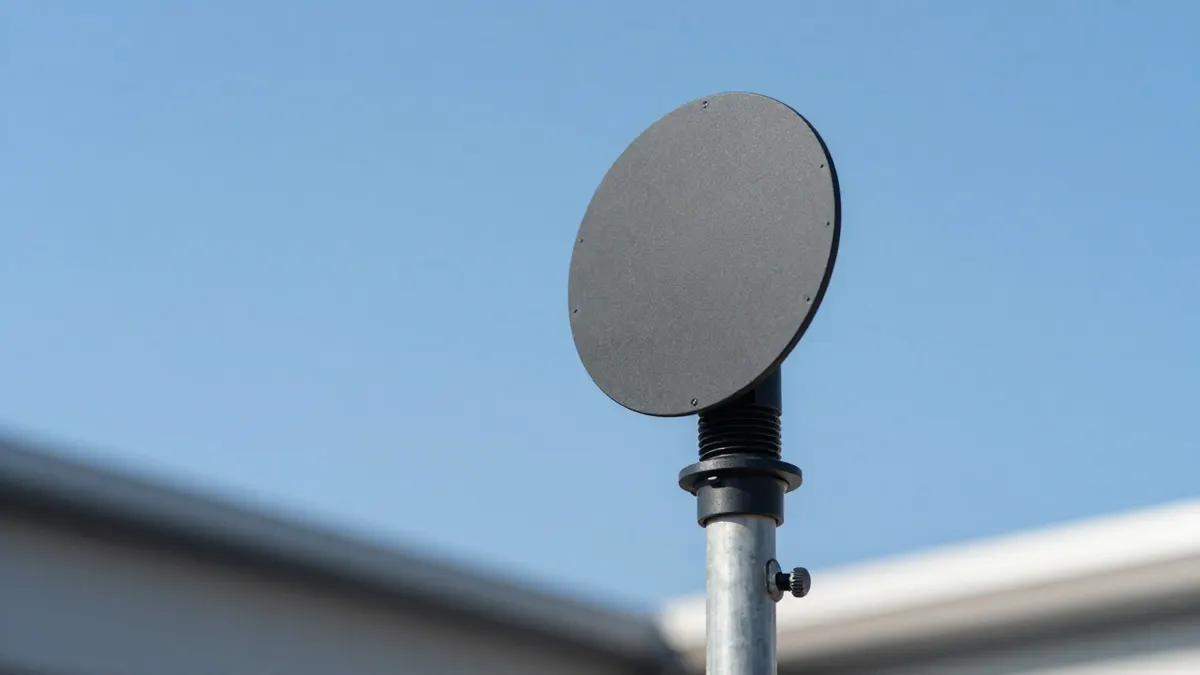
Which outdoor Helium antenna to buy: gain by location
Start with where the antenna will sit and what surrounds it.
Flat terrain or low mounting (under 6 m)
Here the 8 dBi outdoor antenna is a good fit. Its narrow vertical beam reaches farther along the horizon, and with a clear line of sight you can expect roughly 8 to 15 km in the open. Inside dense suburbs, expect 2 to 4 km.
Hills, tall buildings or high rooftops
Pick lower gain. A 5.8 dBi helium antenna has a wider vertical beam, so it still covers hotspots that sit below you in a valley or on a lower street. If you mount at 15 m or more on a tower block, an 8 dBi unit may shoot right over the devices you want to reach.
What about 3 dBi?
Fine for a window sill or a short test. Outdoors, it wastes the extra height you paid for in effort.
Helium antenna guide: what else matters
Gain gets the attention, yet three other details change results as much.
- Frequency: EU hotspots run on 868 MHz. A US 915 MHz antenna will work badly and can hurt your radio.
- Cable: thin coax loses a lot. A 10 m run of cheap RG58 can eat 3 dB or more at 868 MHz, which cancels the gain of an 8 dBi antenna. Use low-loss LMR400 type cable for anything beyond 3 m.
- Connectors: most hotspots use N-type on the antenna side and need an adapter for SMA or RP-SMA on the miner. Every extra connector costs a little signal.
- Build: look for fiberglass, a sealed base and an IP67 rating or better.
Cable length is the mistake people make most. Moving the miner closer to the antenna, and running a network cable instead of coax, is often smarter than buying a longer feed line. A PoE setup makes that easy.
Mounting and safety
Place the antenna as high as you can, with at least 1 m of free space on each side and nothing metal within about 50 cm. Keep it vertical. A tilted omnidirectional antenna sends its beam toward the sky and the ground.
Fit a lightning arrestor on the cable and ground it properly. A decent arrestor costs around 10 to 25 EUR and is much cheaper than a fried hotspot. On a roof, check local rules and ask the building owner first. If the mast is taller than a few metres, get a professional to install it.
Seal every outdoor connector with self-amalgamating tape, then wrap it in vinyl tape. Water in an N-type joint is the usual reason a good antenna turns bad after one winter.
Typical price ranges
Indicative figures only. A basic 3 dBi unit runs from about 15 EUR. A good 5.8 to 8 dBi fiberglass antenna usually lands between 40 and 90 EUR. Add roughly 30 to 60 EUR for a pigtail or low-loss cable, an arrestor and a mounting bracket. Very cheap antennas often miss their stated gain by a few dB, so read independent test results where you can.
If you want to compare listings side by side, a Helium antenna shop can show current specs for EU 868 models. For setup stories and range tests, the Helium hotspot blog covers real installations.
A quick decision path
- Open land, mast under 6 m: 8 dBi.
- City rooftop or hilly area: 5.8 dBi.
- Cable longer than 5 m: low-loss coax, or move the miner outdoors with PoE.
- Windy or coastal site: choose fiberglass with a stainless bracket.
Frequently Asked Questions
Which outdoor Helium antenna to buy for a city apartment?
Go for a 5.8 dBi fiberglass antenna on the balcony rail or an outside wall. It handles uneven building heights better than an 8 dBi model. Keep the cable under 3 m if you can.
Is an 8 dBi antenna always better than 5.8 dBi?
No. It reaches farther on flat ground but covers a thinner slice vertically. In hills or from a high roof, the 5.8 dBi version often reaches more devices.
Can I use a 915 MHz antenna in Europe?
You should not. It is tuned for the US band and performs poorly at 868 MHz. It can also reflect power back into the radio, so buy a model made for EU 868.
How high should I mount the antenna?
As high as safely possible, with a clear view around it. Going from 2 m to 8 m often improves range more than any jump in gain.
Do I need a lightning arrestor?
Yes, for any outdoor mast or roof mount. It protects the hotspot and your home wiring from induced surges, and it takes about ten minutes to fit.